

REVIEW · HUE ROYAL TOMBS TOURS
Hue Royal Tombs Tour: Visit Best Pagodas & Mausoleums
The tombs of Hue make emperors feel human. This private tour lets you shape a route through the Nguyen dynasties most famous resting places and key Buddhist sites, with a local English guide and a private car.
I especially like how the stops connect palace life to spiritual life. Minh Mang and Tu Duc are not just monuments, they also reflect how the court worked, including the emperor’s wives, concubines, and eunuchs, explained in plain terms by your guide.
One drawback to plan for is that the main monument tickets are not included. You’ll pay an entry fee per tomb, so your total cost depends on which mausoleums you choose.
Key highlights that make this Hue tour worth your time

- A customizable itinerary in Hue, so you can prioritize the tombs or the pagodas without feeling rushed
- Minh Mang, Tu Duc, Khai Dinh, Gia Long, and Dong Khanh, giving you a clear picture of how Nguyen power evolved over time
- Thien Mu and Tu Hieu pagodas, where you see why Buddhism still matters to daily life in Hue
- Private transport with door-to-door pickup, typically from hotels in the city center or Hue Train Station
- Guides like Bi, Duy, Ba, David, and Tra My, praised for punctual, helpful pacing and extra context on Vietnam beyond the monuments
Over the pass and into the imperial city
- Hue Customizable Tour with Imperial Citadel & Forbidden City
★ 4.9 · 937 reviews - Hue :Exploring Royal City with Multi Options and Dragon Boat
★ 5.0 · 675 reviews - Hue City Tour Full Day – Group Tour
★ 4.7 · 518 reviews - From Hue: DMZ Tour with Vinh Moc Tunnels and Khe Sanh Base
★ 4.9 · 503 reviews
Why Hue Royal Tombs tours feel different from typical sightseeing

Hue’s royal tombs are spread out, and that matters. If you go on your own, you can spend more energy on logistics than on reading the site. With a private driver and guide, you spend your time where it counts: at the tombs and pagodas, with time for photos and a slower, more thoughtful pace.
What I love most is the way this route helps you connect three threads. First is imperial architecture, second is how court life actually functioned, and third is the Buddhist world that shaped Vietnamese values around mourning, memory, and moral conduct. Even when you are only standing in one courtyard, you end up understanding why that courtyard exists.
You also get practical flexibility. Your itinerary can be adjusted to fit your interests and your energy, which is a big deal because the tombs can involve walking across multiple sections.
Finally, you’ll learn from local English guides. People name guides like Bi, Duy, Ba, David, and Tra My for a reason: the best part is not just facts, it’s how they translate the meaning of the place into human stories.
Price and tickets: the real value behind $15
The base price is listed as $15 per person, with a private car/van and hotel or station pickup and drop-off in the Hue city center. That’s good value for two reasons.
First, the tomb sites are not next door to each other, so private transport is where a lot of your budget would normally go. Second, you are not locked into one rigid plan. The tour is designed so you can choose which major mausoleums to include.
Now the important part: tomb tickets are not included. You pay 150k per tomb. The tour notes that you may want to buy combo tickets that bundle the Imperial City with tomb access, such as 420k per person for Imperial City with 2 tombs or 530k per person for Imperial City with 3 tombs (valid in two days). That means your best deal depends on how many tombs you plan to see.
My advice is simple:
- If you want fewer tombs, you may just pay the 150k per tomb tickets.
- If you want more than two tombs, check the combo options first so you don’t overpay.
- Decide on your must-sees early, then let the guide build the order around that.
Also note that food and drinks are not included. Build in a small budget for water and a snack, especially since you’ll have stops with free time and walking.
How the day runs: pickup, pacing, and scenic drives

Your day starts with pickup in Hue. Options include city center hotels and Hue Train Station. From there, the route moves between mausoleums and pagodas, with short scenic drives and designated photo stops.
The timing is built for real viewing, not a museum sprint. You typically get guided time at each major stop, plus free time afterward. That mix matters at these sites, because you’ll want a moment to step back, take photos, and read what the guide just explained.
There are also blocks where the schedule includes walking time and, at the pagodas, optional light activity like scooter rides or hiking. If your legs tire easily, tell the guide early. You can usually shift your pace because the tour is private.
Other tombs along the Perfume River
- Hue: Royal Tombs & Pagoda Private Tour By Dragon Boat & Car★ 4.9 · 257 reviews
- Hue: Royal Tombs Private Tour with 3 Best Tombs & Pagoda★ 4.9 · 213 reviews
- Hue: Dragon Boat, Perfume River, Pagoda & Royal Tomb Tour★ 4.9 · 194 reviews
- Hue: Hue Royal Tombs Tour Visit 3 Best Tombs & Pagoda★ 4.9 · 170 reviews
- Hue: Private Dragon Boat, Pagoda, and Royal Tomb Tour★ 4.8 · 141 reviews
Tu Duc Tomb: a ruler designing life after life

Tu Duc is one of the most recognizable Nguyen tombs, built by King Tu Duc for himself from 1864 to 1867. What makes it special is that it functioned as more than a burial place. It was also where Tu Duc sometimes lived and worked while he was alive.
You’ll notice the tomb is planned in a way that feels almost like a self-contained world. The site area is about 12 hectares, and it is split into two separate parts: a temple area and a burial area. That layout helps you understand a key theme of imperial funerary design, the separation between public ritual and private rest.
It also had roles for the people tied to the king after his death in 1883, including minor wives, concubines, and eunuchs. A good guide will point out how those roles shape what you see on the ground. You are not just looking at stone and gates, you are seeing how the Nguyen court imagined order continuing beyond the ruler’s life.
One consideration: because the tomb is designed as a large complex, your walking time can add up even if you are moving gently. Comfortable shoes matter here.
Minh Mang Tomb: the palace complex where court life repeats in stone

Minh Mang’s tomb is dated 1840 to 1843. The timeline is dramatic: he started the project in April 1840, died during construction, and the tomb was later finished by his son, King Thieu Tri (1840 to 1847). That kind of continuity gives the place extra meaning. It’s not only the emperor’s vision, it’s also a legacy project carried forward.
Minh Mang’s tomb covers about 15 hectares and includes 26 buildings with different functions. That scale is why this stop is a favorite for people who like architectural complexity. It is also why the site can feel like a living system rather than a single monument.
Here’s what I find most useful for your visit. The tomb’s grounds included living space for minor wives and concubines (who had no children for him) and eunuchs after his death in 1840. When your guide connects the building layout to those roles, the tomb becomes easier to “read.” You start to see how the Nguyen court managed hierarchy even in death.
Practical tip: plan on time to wander. The best understanding often comes when you pause between buildings and let your guide’s explanation settle.
Khai Dinh Mausoleum: the Nguyen king who mixed styles and time periods

Khai Dinh’s mausoleum was built from 1920 to 1931. It began under Khai Dinh himself from 1920 to 1925, then was continued after his death by his child from 1925 to 1931. This creates a sense of transition, not only in design but in the way the project was carried to completion.
Khai Dinh is also known for style. This is described as the only Nguyen royal tomb that blends Oriental and European elements. If you like when history shows up visibly in design, this is the one. It helps you understand that Vietnam’s royal world was not sealed off, it changed in contact with other influences.
The mausoleum is listed with dimensions of about 48.5 meters by 117 meters, and you’ll also learn an important structural detail: the king was buried underneath his tomb. That detail is worth knowing before you arrive, because it changes how you interpret the space above you.
Potential drawback: because Khai Dinh’s site is designed with big visual statements, it can feel like you are being pulled in many directions. A guide helps you focus on what matters rather than just chasing photo angles.
Gia Long and Dong Khanh: Nguyen power told through founding and rural setting

Gia Long’s mausoleum complex began construction in 1814 and was completed in 1820. It is the burial site of Emperor Gia Long, founder of the Nguyen Dynasty (1762 to 1820). The site is in Long Ho Ward, Phu Xuan District, Hue City, and it is described as a complex of many royal mausoleums. That makes it a strong choice if you want to understand the dynasty beyond a single ruler’s personal story.
Dong Khanh’s tomb, also called Tu Lang, is different in feel. It’s described as lying in a rural area, in the middle of Thuong Hai village (Thuy Xuan ward). In architectural terms, it includes about 20 large and small works with relatively high density, and the complex is divided into a palace area and a tomb area.
What you get from combining Gia Long and Dong Khanh is perspective. Gia Long gives you a founding narrative. Dong Khanh shows you how royal burial complexes could sit within a wider landscape, more grounded and less centralized than the idea of an imperial city.
If you prefer quieter stops and less concentrated crowd energy, Dong Khanh is often a better match than the “headline” tombs.
Thien Mu Pagoda: a Buddhist legend that anchors Hue today

Thien Mu Pagoda was built in 1601 by the founder of the Nguyen family in central Vietnam. The story tied to its location comes from a dream, according to the tour description. That kind of legend matters in Hue because it shows how spiritual authority is explained through local belief, not just architecture.
Thien Mu is described as a famous religion spot in Hue, so you can expect the site to feel active and meaningful to locals. Even if you are not a regular temple visitor, this is the sort of stop where Buddhism makes sense because you see how the place continues to live in the present.
The tour schedule also includes time for photo stops and guided viewing, plus some walking and even mentions a scooter ride and hiking options. If you want the gentler approach, stick with walking and take breaks whenever you need them.
Từ Hiếu Pagoda: the Root Temple and a modern spiritual presence

Từ Hiếu Pagoda is also known as the Root Temple and is described as one of Hue’s greatest temples and a cultural and historical site. This is the place where the tour points you toward broader meaning, not just royal-era monuments.
The schedule notes that Zen Master Thich Nhat Hanh, a global spiritual leader and peace activist, is living there after returning to Vietnam from the US. That fact gives the pagoda a contemporary relevance. You are not only looking backward at history, you’re seeing how spiritual practice connects across borders.
The Từ Hiếu block is longer and includes a mix of walking, hiking, and optional activities listed in the schedule, such as bike tour, motorcycle ride, scooter ride, and even yoga class. One part of the schedule also lists a helicopter flight, which you should treat as something to confirm as included or optional in your chosen option. For most people, the core value is the temple visit plus time to take in the setting.
What I’d focus on here: slow down. If Minh Mang and Tu Duc teach you how an empire organized power, Từ Hiếu helps you understand how spiritual life offered an alternative structure for meaning.
Make the private guide work for you, not against you
The guides are a major reason this tour earns high marks. People name guides like Bi and Duy for being helpful on the drive, and also for pacing that avoids the rush. Another guide name that comes up is Tra My, praised for being a good guide during the mausoleums portion.
Here’s how you can get the best experience regardless of who you get:
- Tell your guide what you care about. If you want more architecture, ask for building-by-building explanations.
- If your legs are tired, ask for shorter routes within each complex. The tour format supports customization.
- Use the guided time to learn the “why” behind the layout, then use free time to wander and take photos without trying to decode everything at once.
If you’re the type who likes extra context on Vietnam beyond the monuments, a good guide can also share helpful suggestions you can use elsewhere in Hue.
Who this Hue Royal Tombs tour is best for
This tour is a great match if you want:
- a private car so you can cover distant sites efficiently
- a route focused on Nguyen emperors and their mausoleums
- a temple pairing that includes Thien Mu Pagoda and Từ Hiếu Pagoda
- an English-speaking local guide who explains court life details, including wives, concubines, and eunuchs
It may not be ideal if you want total freedom with zero structure. The value here is that a guide organizes the day, and you do pay attention at each stop.
Should you book the Hue Royal Tombs Tour?
I’d book it if you want the strongest “Hue royal tombs and pagodas” day without the stress of planning transport between sites. The $15 base price is compelling when you consider that private transport in Hue is usually the hardest piece to arrange efficiently.
Book especially if you like meaning, not just photos. Minh Mang, Tu Duc, and Khai Dinh reward visitors who want to understand how a court imagined life, death, and memory.
Just do two quick checks before you go:
- Decide which tombs you truly want so you can budget the 150k per tomb ticket cost or choose a combo ticket if it fits your plan.
- Confirm what’s actually included in the longer Từ Hiếu activity block, since the schedule lists multiple activity types.
If you do those two things, you’ll get a smooth, customized day that ties together royal power and living Buddhist culture in Hue.
FAQ
What does the $15 per person price include?
It includes hotel or city center pickup and drop-off, and private transportation by car or van. A tour guide is included for the option with guide.
Are tomb entry tickets included?
No. Tomb tickets are not included, and the cost is listed as 150k per tomb/person.
Can I customize which tombs and pagodas I visit?
Yes. You can customize your personal itinerary to visit the best sightseeing places in Hue city, including major royal tombs and top pagodas.
How long is the tour?
The duration is listed as 2 to 8 hours, depending on the available schedule and the sightseeing selections.
Where will the guide pick me up?
Pickup is optional at city center located hotels or anywhere in Hue city center. Pickup is also offered at Hue Train Station.
Is there an English-speaking guide?
Yes, the tour listing states a live English guide.
Is this a private group tour?
Yes, it is described as a private group with a private car or van.
Is the tour wheelchair accessible?
Yes, the tour is listed as wheelchair accessible.
More Tour Reviews in Hue Vietnam


More Tombs Along the River


More Days Up in Hue
Just added around Hue Vietnam


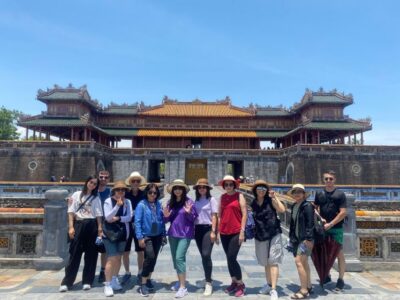


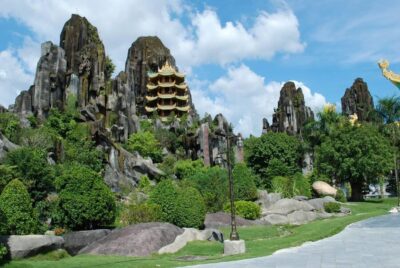
Hue Royal Tombs Tours, compared.
 ★ 4.9Hue: Royal Tombs & Pagoda Private Tour By Dragon Boat & CarFrom $12257 reviews
 ★ 4.9Hue: Royal Tombs Private Tour with 3 Best Tombs & PagodaFrom $11213 reviews
 ★ 4.9Hue: Dragon Boat, Perfume River, Pagoda & Royal Tomb TourFrom $11194 reviews
 ★ 4.9Hue: Hue Royal Tombs Tour Visit 3 Best Tombs & PagodaFrom $11170 reviews
 ★ 4.8Hue: Private Dragon Boat, Pagoda, and Royal Tomb TourFrom $13141 reviews
 ★ 5.0Explore 3 Royal Tombs with Informative English-Speaking DriverFrom $2776 reviews
 ★ 5.0Daytrip to Hue Imperial Palace, Royal King Tomb &Perfume River via Hai Van PassFrom $14037 reviews
 ★ 5.0Hue Royal Tombs Tour: Visit Best Pagoda & King’s MausoleumsFrom $1736 reviews
Browse the lists this tour appears in