

REVIEW · WALKING TOURS
Da Nang History Tour Walking By Cham Pa Museum-Cuisine-Cafe
Stone gods and street snacks, all in one walk. This Da Nang History Tour threads Champa culture through Cham Museum, then keeps going with food and city landmarks along the Han River. I love how the guide turns stone statues into stories you can actually follow, and I also like the ending food pair of pho plus salted or coconut coffee. One thing to plan for, it is a walk-heavy day, so comfortable shoes really matter.
If you are short on time and want more than beach views, this is a practical way to get your bearings in central Vietnam. The tour is led by a historian background host, in English, and you meet your guide in front of Cham Museum. You get a tight mix of religion, colonial and war-era traces, and everyday Da Nang life.
I also think it works well as a warm-up if you plan to visit My Son later. You will connect the dots between what you see in stone at Cham Museum and the wider Cham Pa story, so you are not starting from zero.
Key things I’d focus on before you go

- Cham Museum sculptures: Hinduism stone statues from the 7th to 14th century, with different storylines tied to the Cham Pa world
- A historian background guide: the pacing makes the explanations feel like a guided walk, not a lecture
- Food that matches the city: pho plus green Hanoi herbal tea, then coconut or salt coffee to end the day
- Religion and local beliefs: a stop at An Long Pagoda, with Mahayana Buddhism and how beliefs show up in daily life
- Da Nang landmarks in context: Dragon Bridge (666 m), Han River, and war-era construction you can recognize as you walk
- Markets and neighborhoods: a collectivism-era market area plus hidden alleys, then Han Market and the local Chinese community story
More of the city itself, between the beach and the bridges
- Da Nang: Lady Buddha, Marble Mountains, and Am Phu Cave Tour
★ 4.7 · 3,373 reviews - From Da Nang/Hoi An: Golden Bridge Ba Na Hills Full-Day Tour
★ 4.7 · 1,737 reviews - Da Nang: Han River Local Cruise by Night
★ 4.1 · 1,152 reviews - Da Nang: Golden Bridge, Lady Buddha, Marble Mt & Am Phu Cave
★ 5.0 · 1,147 reviews
Cham Museum: stone Hinduism, 7th to 14th century stories

Your day starts right in the heart of the Cham Museum area, which is exactly the right move. If you are curious about central Vietnam before the modern city took shape, this is where the tour earns its keep.
Cham Museum is described as the world’s largest collection of Hinduism sculptures. The big reason it feels special is scale and variety: you are looking at hundreds of antique stone statues dated from the 7th to 14th century, and each piece comes with its own meaning. Instead of just admiring sculptures for form, the guide connects them to the Cham Pa Kingdom and the religion behind them, including the link to famous Cham religious relics connected with My Son.
Here is what I like about this approach for your trip planning. When you do My Son later, you will recognize themes faster. You will know what you are looking for in terms of religious symbolism and why those stones mattered, not just that they are old.
Practical tip: plan to slow down inside the museum. Even if you love history, it is easy to rush when the group moves on. If you tend to read carefully, keep an eye on your own pace so you do not feel like you are sprinting through the best parts.
How the tour links Cham Pa culture to what you see later
The museum portion is not treated like a stand-alone stop. The host weaves in background on Vietnam’s past in broad terms, and they specifically highlight how the Cham Pa Kingdom fits into early Southeast Asia.
That connection is useful because Da Nang can feel split between different eras: Cham stone craft, Buddhist practices, French colonial traces, American-era war infrastructure, then modern street life. This tour helps you stitch those layers together into one storyline.
You will also hear the practical interpretation of religious art. The sculptures are not presented as “mysterious ruins.” They are presented as cultural messages, made for belief systems and community identity. That is the kind of framing that makes the stones stick in your mind.
An Long Pagoda and Mahayana Buddhism in everyday Da Nang life

After the museum, the day turns toward how belief lives outside museum walls. You visit An Long Pagoda to learn Mahayana Buddhism and local beliefs, including the ways those ideas affect daily life in the area.
This stop is valuable because it gives you a reality check. Cham culture and Buddhist practice are not the same thing, but the tour shows you how religions and beliefs are part of the same human world: festivals, family routines, and community behavior.
Also, a pagoda visit changes your pace. After a lot of stone explanations, you get a place with sound, movement, and living tradition. Even if you are not religious, you can still appreciate how a community organizes space around belief.
Consideration: if you hate detours that require quiet attention, this stop might feel slower than the food or bridge parts. I think it is worth it, though, because it stops the day from becoming only sightseeing.
More of Da Nang on foot
- Guided Tour to Marble Mountains & Hoi An Walking Tour , Night Market, Boat Ride★ 5.0 · 218 reviews
- Hoi An Night Market with Hoi an walking Tour , Colourful Lanterns, Boat Ride★ 5.0 · 142 reviews
- Da Nang Street Foodie Walking Tour★ 5.0 · 47 reviews
- Danang Walking Food Tour★ 4.5 · 40 reviews
- Da Nang: Local Street Food Walking Tour★ 4.7 · 37 reviews
Market history in the 1980s, collectivism, and hard times
One of the most interesting parts of this tour is the stop at a local market area built in the 1980s under collectivism, described as strongly similar to North Korea. The goal is not political debate. It is context for how people lived when the economy and access to goods looked very different from today.
You learn about the hard situation Vietnam faced before, then you see how those past conditions shaped everyday life. This is the kind of stop you can easily skip if you only do the famous sights. Here, it becomes part of the city portrait.
Then the host takes you through hidden alleys. That matters because you see that “local life” is not only big markets. It is the small streets where routines happen and where the city feels lived-in.
If you like travel that explains why things look the way they do, this is a strong segment.
Dragon Bridge (666 m) and Han River, plus war-era traces

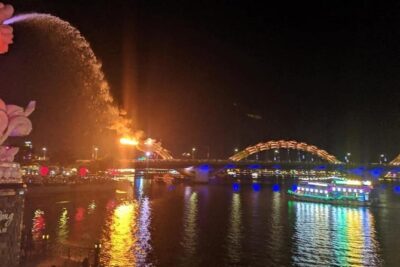
Back outside, you get one of Da Nang’s most iconic modern landmarks: Dragon Bridge, 666 m long. The scale is easy to spot even if you are not aiming for a photo. Walking nearby and seeing it in motion is a good reset after the more reflective stops.
Then you walk along Han River. This is where the tour tries to do something important: it connects place to history. The guide highlights what was built for the Vietnam War era, and notes that Da Nang was one of the strongest military bases before 1975. You are not asked to memorize dates. You are asked to read the city as a landscape shaped by conflict and rebuilding.
In my view, the “walking along the river” part is what makes this feel different from a quick viewpoint stop. The city is a long story, not a single postcard.
Pho corner stop, green herbal tea, and choosing chicken or beef

At some point you reach a quiet street corner for a classic meal. The tour includes pho, either chicken or beef, plus green Hanoi herbal tea at the pho stall.
This is more than a lunch break. It is a practical way to taste local flavor while your brain is still focused on history. Pho also gives you comfort during a walking day, and the green herbal tea helps balance all the salty, rich flavors you might taste later.
One small planning idea: if you tend to eat light, you might want to skip a heavy breakfast. The tour includes a full meal, then ends with coffee, so arriving hungry is the right strategy.
Da Nang Cathedral Church, locals calling it Chicken Church

Another standout city landmark is Da Nang Cathedral Church, which locals nickname Chicken Church. The nickname is memorable, and it gives you a more local way to process the sight.
This stop works best if you are the kind of traveler who likes layers. Da Nang is not only temples and rivers. It also holds colonial and Christian-era architecture that locals describe in their own playful language.
Even if you only spend a short time here, it helps round out the day so it is not all ancient Cham stone and war-era context.
Han Market and the French-built maze of central Vietnam life

Next comes Han Market, described as the biggest market in central Vietnam. The tour frames it in the French colonial period, then connects that history to the stories of the Chinese community living in Vietnam.
This is another “context first” stop. Markets are easy to treat like shopping zones. Here, the host turns them into a snapshot of who came, how communities formed, and how trade shaped city life.
You will also likely notice how the tour rhythm shifts again. You move from landmarks into a louder, more everyday environment. If you like people-watching and street energy, this is a good time for it.
Coconut coffee or salt coffee to close out the day

You end with coffee, coconut coffee or salted coffee, described as the best coffee in Vietnam. This finish is smart. It is warm, sweet or salty depending on the drink, and it gives your taste buds a final anchor point after hours of walking.
If you are curious, the salted style is the one people remember. The coconut coffee also fits the Da Nang feel, since coastal Vietnam naturally pairs sweetness with bold flavors.
My advice: if you have not tried both, pick one you think you will enjoy, but consider ordering the one that sounds most unusual to you. The tour is designed to give you the local version, not generic coffee.
Price and value: $28 for museum tickets plus real food stops
At about $28 per person for a full day, the value depends on what you compare against.
Here, your money covers several meaningful items: Cham Museum entrance tickets, pho (with a choice of chicken or beef), green Hanoi herbal tea at the pho stall, and coconut or salted coffee. On top of that, you get a private guided walk with a host who has a historian background, and the guide leads you through multiple stops across Da Nang instead of just one attraction.
So if you were planning to do Cham Museum plus a meal and a guided walk on your own, you would likely spend similar money, but you would lose the stitching. This tour’s strength is the connections: Cham sculptures to My Son context, pagoda beliefs to local life, then markets and neighborhoods to Da Nang’s layered past.
One cost note to remember: tips for the certificate guide are not included, and the guidance given is minimum $4 per person. You should factor that into your total budget if you want to tip appropriately.
Who this tour is best for, and who should rethink
This experience is a good match if you want a structured introduction to central Vietnam that goes past the quick photo list. It is also excellent as a pre-planning day if you will later visit My Son, because the Cham Museum context makes what you see next easier.
It fits well for travelers who like:
- history explained in plain language while walking
- religion and culture stops that connect to daily life
- a food-focused ending with pho and salted or coconut coffee
I would rethink it if:
- you do not like walking for long stretches
- you want a museum visit with lots of free time and no guidance pressure
- you prefer beaches or modern entertainment over history and local neighborhoods
A quick note on guides, English, and small-group feel
The tour is led by a live English guide with a historian background. Private group options are available too, which usually helps if you are traveling as a couple or small circle and want your pace respected.
In the past, English guides have included hosts named Mun and Hong. The common thread in their style is clear, story-driven explanation paired with practical guidance through Da Nang sights.
Should you book this Da Nang history walking day?
I think you should book it if you want one day that makes Da Nang feel understandable. The combination is rare: Cham Museum sculptures, An Long Pagoda and local belief context, markets and alleys that show everyday life, plus Dragon Bridge and Han River seen through a historical lens, and then a real food finish with pho and salted or coconut coffee.
Skip it only if you are not into walking, or if you already know the Cham Pa story well enough that the museum explanations will not add much.
If you are arriving in Da Nang for the first time and you want your city day to feel meaningful instead of random, this is a strong choice.
FAQ
Where do we meet for the tour?
You meet your guide in front of Cham Museum.
How long is the tour?
It is a 1 day experience.
What language is the tour guide?
The tour is conducted in English.
What food is included?
The tour includes chicken pho or beef pho, green Hanoi herbal tea, and coconut coffee or salted coffee.
Is transportation included?
Pick up and drop off are not included.
Are museum entrance tickets included?
Yes. Cham Museum entrance tickets are included as part of the tour.
Is there a private group option?
Yes. A private group is available.
How does tipping work?
Tips for the certificate guide are not included, and the guidance given is a minimum of $4 per person.
More Tours in Da Nang


More Tour Reviews in Da Nang

Still in Da Nang? Keep Going

Just added around Da Nang

Walking Tours, compared.
 ★ 5.0Hue: Imperial City Walk, Motorbike Tour & Private Car OptionsFrom $7732 reviews
 ★ 5.0Evening Walking Food Tour, folk game and lantern boatFrom $39665 reviews
 ★ 5.0Hoi An Ancient Town Walking Tour with a LocalFrom $9517 reviews
 ★ 4.9Hoi An Ancient Town – Walking Tour with Local GuideFrom $14385 reviews
 ★ 5.0Hoi An Street Food Walking Tour with TastingsFrom $35317 reviews
 ★ 4.8Hue Imperial Ancient City Walking TourFrom $2308 reviews
 ★ 5.0Hue Imperial City Walking Tour: Citadel & Forbidden CityFrom $9280 reviews
 ★ 5.0Hoi An Walking TourFrom $69269 reviews
Browse the lists this tour appears in