

REVIEW · COOKING CLASSES
Farming & Cooking Class in Hoi An – Small Group Tour
Farm, cook, and eat Hoi An style. This small group tour takes you from a local market in Hoi An to Tra Que Organic Vegetable Village, with time to farm, then a hands-on cooking class where you actually plate your own lunch. If you like food that comes with a backstory, this one delivers.
I love how the day starts with a real ingredient hunt, not a quick walk past stalls, and I love that the cooking is taught with individual attention from the guide and local chef. The best part is you end up making the dishes, not just watching, from papaya salad to banh xeo.
One consideration: the farming portion is practical and physical, and the traditional foot massage uses medicinal herbs. If you’re hoping for mostly sitting around, or you’re sensitive to strong scents on skin, this might feel like more than you expected.
Key highlights to watch for before you go

- Market shopping for your own dishes: you pick ingredients early, so cooking later feels connected.
- Hands-on work at Tra Que: hoeing, transplanting, watering, and even seaweed collecting show how the farm runs.
- Garden time for herbs you will use: you walk the vegetable village and spot culinary plants tied directly to the recipes.
- Cooking class taught step-by-step: you learn techniques and cook multiple classics, then eat them right away.
- Chef and guide personalities matter: Min leads many of the classes, and guides like Uyen add extra context and humor.
Thirty minutes down the coast, more of the Ancient Town
- Hoi An: Basket Boat Ride in the Coconut Forest
★ 4.9 · 4,956 reviews - Hoi An: Vietnamese Coffee Culture and Coffee Making Class
★ 4.9 · 4,006 reviews - Hoi An: Vietnamese Foldable Lantern Making Class
★ 4.9 · 3,742 reviews - Cooking Class Hoi An:Local Market, Basket Boat, Fishing & Cooking
★ 5.0 · 3,660 reviews
Why Tra Que Organic Vegetable Village makes this more than a cooking demo

Hoi An has plenty of cooking classes. This one leans different because it starts in the fields and gardens. Tra Que Organic Vegetable Village is the heart of the experience, and that matters for two reasons.
First, you see the source of flavor. You walk through herb and vegetable beds that end up on your plate later, so you’re not guessing what goes where. Second, you get a real feel for Vietnamese farm work, not just a photo stop.
Your pacing is also built for learning. The day runs about 5 hours, and it’s split into distinct blocks: market, cycling and village time, farming work, a massage break, then cooking and eating. That structure keeps you from feeling rushed, even though you’ll be busy.
And it’s a small group, with a maximum of 15 travelers, which helps the teaching stay practical. With that size, you’re more likely to chop, flip, and practice, rather than hovering at the edge.
The Hoi An market visit, where flavors start taking shape
The tour begins with pickup from your hotel area and an English-speaking guide and local chef. Then it’s off to the local market, where you choose the ingredients for your meal.
This part is worth your attention because Vietnamese cooking is built on balancing fresh herbs, aromatic vegetables, and sauces. In the market, you’re not just buying random produce. You’re learning what’s used where, and why certain plants show up repeatedly in dishes like papaya salad and spring rolls.
From the experience, I’d treat this like your “ingredient briefing.” Take mental notes on what looks like it belongs together. For example:
- herbs that feel fragrant when you crush them gently
- vegetables with bright color and firm texture
- items you’ll recognize later when you’re at the stove
If you’ve done other classes where everything is pre-selected, you’ll notice the difference immediately here. When you shop for your own mise en place, your cooking confidence goes up fast.
Cycling through rice fields and villages before the farm work
After the market, the day shifts into motion. You’ll cycle through rice fields and peaceful villages, then continue with a walk that brings you into the Tra Que area.
This stretch is more than a scenic transfer. It gives your brain time to reset from the busy market energy, and it puts you in the right mindset for what comes next: farming tasks that feel hands-on, not staged.
I also like that you’re not dropped into the farm without context. You get the sense of place, and you arrive ready to learn. The pace is gentle enough for most visitors, but it’s still an active day.
More kitchens open to visitors in Hoi An
- Hoi An Cooking Class(Market,BasketBoat Crabfishing&Cooking Class)★ 5.0 · 3,386 reviews
- From Hoi An: Market Tour, Basket Boat Ride and Cooking Class★ 4.8 · 2,208 reviews
- Hoi An Cooking Class(Local market,Basket Boat,Fishing & Cooking)★ 5.0 · 1,323 reviews
- Hoi An: Basket Boat Ride, Cooking Class by Hangcoconut★ 4.9 · 802 reviews
- Hoi An Eco Tour Cooking Class & Fishing (Local market,basket boat,learn cooking)★ 5.0 · 567 reviews
Gardening tasks at Tra Que: hoeing soil, seaweed, transplanting, watering

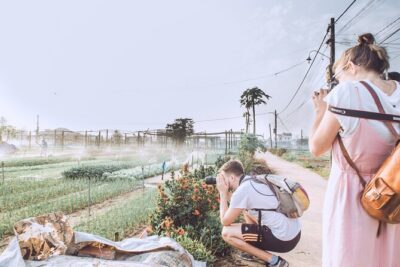
Once you reach the vegetable village, you start with a walk through the garden. You’ll discover culinary herbs and vegetables that will be used in the cooking class. Then you jump into farming activities with a local farmer.
Based on the description, you can expect participation in tasks such as:
- hoeing soil
- collecting seaweed
- transplanting and watering
This is where the tour earns its name. You’re not pretending to farm. You’re doing small, real tasks that help the farm function.
Two tips if you’re going:
- Wear shoes you don’t mind getting dirty. Even if you manage to stay neat, farm paths and soil happen.
- Use sunscreen and light layers. You’re outside for multiple blocks, even though the total duration is only about five hours.
The goal is not athletic bragging rights. It’s to understand farming habits and ingredients, so your cooking has meaning.
The traditional foot massage break, and how to treat it like a reset

After farming, there’s a break before cooking. Part of that break is a traditional foot massage using medicinal herbs.
This is a clever inclusion for two reasons. One, it helps your body recover after kneeling, walking, and handling plants. Two, it adds cultural context without taking time away from the recipes.
A practical note: the massage is herbal-based, so if you’re sensitive to strong smells or have a skin reaction history, it’s smart to mention that early. The tour data also says you’ll be with an English-speaking guide and local chef, so you should feel comfortable raising concerns.
Cooking time with Min: turning market ingredients into classic dishes

The cooking class portion runs for about two hours, and it’s where the day turns from learning into doing. You’ll follow the chef’s demonstrations and then cook.
In many classes, Min is the name that comes up as a host and teacher, and her style appears to make people feel comfortable quickly. You’ll likely also work with helpers during the cooking flow, which helps if you’re new to Vietnamese techniques.
The dishes you’ll learn to prepare include:
- Green papaya salad
- Banh Xeo, a crispy Vietnamese pancake
- Spring rolls
- Fish in clay pot
Here’s what makes this mix smart for you as a cook at home. It’s varied:
- papaya salad teaches balancing acid, crunch, and herbs
- spring rolls teach wrapping and frying or cooking rhythm
- banh xeo teaches how to manage batter and heat for crisp texture
- fish in clay pot gives you a feel for gentle cooking and aroma
During the class, you can expect individualized instruction, not just a group show. The experience is designed so you’re actively chopping and assembling, not only watching.
How the meals come together: your lunch, not a separate restaurant plate

After cooking, you eat what you made. That matters more than you might think.
When you taste your own food right after learning it, you can connect cause and effect immediately:
- Too sour or not sour enough in papaya salad, and what that changes
- How crisp banh xeo gets when the pan heat is right
- What spring rolls taste like when the filling ratio is balanced
- How clay pot fish changes as it cooks through
This immediate feedback loop is one of the best ways to learn. It’s also why I’d call this a class that sticks with you, because you leave with a full meal and the steps in your head.
Vegetarian and special diets, what the tour can handle

The tour information says vegetarian and special diets are available on request.
That’s the right kind of promise, because Vietnamese menus often rely on fish sauce and shrimp ingredients. When a tour states that dietary requests are supported, it signals they plan adjustments rather than just handing you plain sides.
If you want vegetarian, reach out with your needs during booking. Keep it direct:
- vegetarian vs. fish-free and shellfish-free
- any allergies or ingredients you avoid
- how strict you are about sauces and broths
Don’t wait until the day of if you can help it. The more time the chef has, the smoother your meal will be.
Price and value: why $38 feels fair for a farm-plus-class day
At $38 per person, this feels like solid value for Hoi An, mainly because you’re getting more than one activity in the same block of time.
You’re not paying only for a recipe lesson. You’re paying for:
- market time with ingredient selection
- transport and a local guide and chef
- farming participation with a farmer
- a traditional foot massage break
- lunch included
- bottled mineral water
- small group structure (max 15)
When you compare it to many cooking classes that are mostly kitchen-only, the farm and market portions make the price easier to justify. You’re also getting multiple dishes, not just one.
And the tour offers morning or afternoon options, which can help you fit it into a day without paying for extra private tours just to move around.
Small group, pickup, and mobile tickets, the practical side
This experience is built to be easy to join:
- pickup offered
- private transportation included
- English speaking guide and local chef
- mobile ticket
- group discounts
- maximum of 15 travelers
Those details matter on real trips. It means you spend less time figuring out logistics and more time learning how to cook.
Also, because it’s a smaller group, you can usually ask questions without waiting for a large crowd to finish. That’s where good instruction happens.
Who this tour suits best, and who might want another option
This is a great fit for:
- food lovers who want to learn techniques, not just eat
- people who like hands-on activities
- couples and solo travelers who appreciate small groups
- first-time Vietnamese cooking students
It’s less ideal if:
- you hate getting dirty or you’re uncomfortable with active farming tasks
- you strongly dislike herbal-based foot treatments
- you want a quiet, low-effort experience
The day is structured and paced, but it is still a working farm experience. Think of it as half tour, half class, with some real outdoor effort.
A few realistic drawbacks to plan around
The best tours still have friction points. Here are the ones that apply to this format, based on the tour requirements and flow.
Weather affects the experience. The tour requires good weather, and if conditions are poor, you’ll be offered a different date or a full refund.
You’ll be active for hours. Hoeing, transplanting, and watering can be tiring if you’re not used to garden work. Bring water and take breaks if you need them.
The foot massage is part of the package. If you dislike massages, have a skin sensitivity, or prefer to skip herbal treatments, consider whether this inclusion will feel enjoyable for you.
Should you book Farming and Cooking Class in Hoi An?
If you want a cooking class with real context, I’d book this. The combo of market shopping, hands-on Tra Que farming, and cooking multiple signature dishes is a strong use of time.
I especially think it’s worth it if:
- you want to take home more than recipes, you want the reasoning behind flavors
- you like small groups and more direct instruction
- you’re curious about organic vegetable farming in a place famous for it
Skip it or choose something softer if you’re not into physical farm activities or you’re unsure about herbal foot massage.
Overall, for $38 and about 5 hours, you’re getting an active cultural experience plus a full meal you cooked yourself. That’s the kind of travel value I like.
FAQ
How long is the Farming and Cooking Class in Hoi An?
The tour runs for about 5 hours (approx.), with an included two-hour cooking class.
Do I get pickup from my hotel?
Yes, pickup is offered, and the tour includes private transportation.
What dishes will I learn to cook?
You’ll learn to prepare green papaya salad, spring rolls, banh xeo (Vietnamese crispy pancake), fish in clay pot, and other dishes.
Is lunch included?
Yes. Lunch is included, and you eat the dishes you help prepare.
Can this tour accommodate vegetarian or special diets?
Yes. Vegetarian and special diet requests are available if you request them in advance.
How big is the group?
This experience has a maximum of 15 travelers.
What happens if the weather is bad or I need to cancel?
The tour requires good weather. If it’s canceled due to poor weather, you’ll be offered a different date or a full refund. You can cancel for a full refund up to 24 hours in advance, and within 24 hours the amount paid is not refunded.
More Tours in Hoi An


More Tour Reviews in Hoi An


Hoi An, A Few More Ways
Just added around Hoi An



Cooking Classes, compared.
 ★ 5.0Cooking Class Hoi An:Local Market, Basket Boat, Fishing & CookingFrom $283,660 reviews
 ★ 5.0Hoi An Cooking Class(Market,BasketBoat Crabfishing&Cooking Class)From $283,386 reviews
 ★ 4.8From Hoi An: Market Tour, Basket Boat Ride and Cooking ClassFrom $172,208 reviews
 ★ 5.0Hoi An Cooking Class(Local market,Basket Boat,Fishing & Cooking)From $281,323 reviews
 ★ 4.9Hoi An: Basket Boat Ride, Cooking Class by HangcoconutFrom $19802 reviews
 ★ 5.0Hoi An Eco Tour Cooking Class & Fishing (Local market,basket boat,learn cooking)From $29567 reviews
 ★ 5.05 Dishes Cooking Class with Market Trip in Da NangFrom $39466 reviews
 ★ 5.0Hoi An: Bay Mau Eco Cooking TourFrom $35409 reviews
Browse the lists this tour appears in