

REVIEW · DA NANG TOURS
Free E-sim Da Nang: Instagram Half-Day Tour with Local Guide
Da Nang moves fast, and this half-day tour is a smart way to catch key sights in one loop. I like how it mixes cultural stops with street-level icons like the Dragon Bridge, and I also like that you get a local guide who can add the story behind what you see. One thing to consider is rain can throw off timing, and English quality can vary by guide, so it helps to stay patient and ask clear questions.
I’d call this an easy, photography-forward day plan. You’ll be doing plenty of walking on sidewalks and in market aisles, so good shoes matter. Also, it is not suitable for wheelchair users or people with mobility impairments.
Key highlights you’ll actually feel

- APEC Park gives you breathing space and an early, photogenic start
- Da Nang Museum of Cham Sculpture helps you understand the Champa artifacts you’ll see
- Dragon Bridge plus the Carp-Dragon Statue turn Da Nang’s modern identity into photo ops
- Da Nang Cathedral adds a classic religious architecture moment to balance the urban energy
- Han Market is where the tour shifts from monuments to daily life, colors, and local shopping
More of the city itself, between the beach and the bridges
- Da Nang: Lady Buddha, Marble Mountains, and Am Phu Cave Tour
★ 4.7 · 3,373 reviews - From Da Nang/Hoi An: Golden Bridge Ba Na Hills Full-Day Tour
★ 4.7 · 1,737 reviews - Da Nang: Han River Local Cruise by Night
★ 4.1 · 1,152 reviews - Da Nang: Golden Bridge, Lady Buddha, Marble Mt & Am Phu Cave
★ 5.0 · 1,147 reviews
A half-day run through Da Nang’s biggest “I get it now” spots

This is one of those half-day plans that works because it doesn’t force you to choose between history and modern Da Nang. You get a sequence of landmarks that each tell a different part of the city story, and the pace is built for short attention spans and camera stops.
The APEC Park is your soft start. Think open space, easy strolling, and a chance to reset before you hit museums and photo-heavy landmarks. Then the tour moves into deeper cultural territory at the Da Nang Museum of Cham Sculpture, where the focus shifts from “look at this” to “understand what you’re looking at.”
After that, the itinerary leans into Da Nang’s identity in the present. Dragon Bridge is the obvious draw, and the Carp-Dragon Statue keeps the theme going in a more tactile, street-level way. Finally, Da Nang Cathedral and Han Market bring it down to earth. One is architecture and quiet rules. The other is motion, shopping, and everyday local life.
If you’re visiting with limited time, this kind of tight route is a good value play, not because it tries to do everything, but because it hits the parts most people miss when they self-tour.
Why the local guide makes or breaks the day
The biggest quality signal here is the local guide. The guide angle matters because Da Nang is not just a list of sights. The city has layers, from Champa artifacts to modern symbolism, and a guide helps you connect those dots fast.
One guide name that comes up is Ngo Van Troung. Feedback highlights him as informative, and that is exactly what you want for a short tour. When someone can explain what you’re seeing, your photos improve too. You stop shooting random angles and start shooting with meaning.
There is one caution. In rainy weather, or if the group needs extra clarification, English can become a challenge for some visitors. The fix is simple: ask shorter questions, point at what you want to understand, and don’t worry about sounding direct. A good guide can still get you there, even if communication takes a little longer.
Also note the tour language is listed as English, so if English is your comfort zone, you’re in the right place. Still, keep your expectations realistic, especially on a busy half-day.
APEC Park: where the tour’s mood shifts from travel mode to sightseeing mode

You start with APEC Park, and that’s a smart choice. Parks give you that first visual win without the pressure of formal rules. You’re likely to have an easier time taking photos here because you’re not competing with ticket lines or indoor crowds.
This stop also helps you warm up for the rest of the day. By the time you reach the more symbolic sights like Dragon Bridge and the Carp-Dragon Statue, you’re already in walking rhythm and camera ready mode.
Practical tip: wear light clothing and comfortable walking shoes. Even a half-day can feel long when you’re moving between sun, shade, and rain. Bring sunscreen and a hat. Central Vietnam sun is no joke, and one forgotten sunblock moment can ruin the last two stops.
More days with someone who knows the roads
- Private guided Sunworld Ba Na Hills & Golden Hands Bridge★ 5.0 · 264 reviews
- Guided Tour to Marble Mountains & Hoi An Walking Tour , Night Market, Boat Ride★ 5.0 · 218 reviews
- My Son Sanctuary Guided Tour with Rice Paper Making from Da Nang★ 5.0 · 115 reviews
- HUE City 1 Day Guided Tours from Da Nang City★ 4.5 · 100 reviews
- Guided Private Ba Na Hills/Golden Hands Bridge, Marble Mountains★ 5.0 · 96 reviews
Da Nang Museum of Cham Sculpture: the stop that gives meaning to your photos
The Da Nang Museum of Cham Sculpture is where the tour earns its cultural weight. The highlights call out ancient Champa artifacts, and this is the practical bridge between “nice statues” and “I know what this represents.”
Here’s why I think this matters for you: without context, museums turn into photo scavenger hunts. With a guide, you get a sense of what you’re looking at and why it shows up in Da Nang’s story. That makes your museum time more than a break from the street. It becomes a foundation.
What to expect: museum time tends to be less about big outdoor photo angles and more about careful looking. Plan for slower pacing here than at the parks and bridges. If you like photography, take your time. Get a few steady shots, then step back and watch how the guide points out details you might miss.
If you’re traveling with a camera, this is also the place to practice: shoot, refocus, adjust, and shoot again. You’ll get better results than rushing through.
One more note: the tour includes entrance fees to all sites. So you’re not juggling tickets during the day. That’s a small thing, but on a half-day it helps your stress level.
Dragon Bridge and the Carp-Dragon Statue: modern Da Nang at human eye level
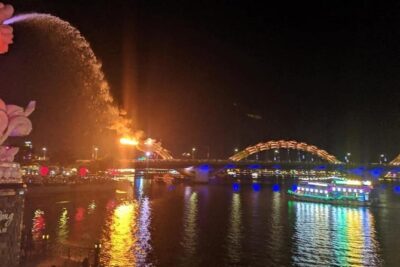
Then comes the big visual punch: Dragon Bridge. This is one of those landmarks that is instantly recognizable in person, and the tour doesn’t waste your time. You’re set up to shoot it from angles that match how people actually take photos of it, not just from one spot.
Right after that, you’ll see the Carp-Dragon Statue. The pairing works. The bridge is a famous modern symbol. The carp-dragon imagery gives it a mythic, cultural flavor, so it doesn’t feel like pure spectacle.
Why this matters for you: when you see both, you understand how Da Nang connects the old and the new. You’re not just ticking boxes, you’re watching the city express itself through a mix of symbolism and street presence.
Weather note: if it’s rainy, reflective surfaces and wet pavement can affect lighting and footing. You might need to slow down for safety. Plan to dry off your hands, protect your camera from sudden drops, and accept that some shots may take a couple tries.
Da Nang Cathedral: architecture, respect, and quick moments of calm
Next is Da Nang Cathedral. A cathedral stop adds contrast to the rest of the route. Instead of street photography and market energy, you get a more controlled atmosphere where you’ll want to slow your pace and watch your body language.
The tour info specifically reminds you to respect local customs and traditions at religious or cultural sites. That’s not just etiquette. It affects how comfortable you feel and whether you get smooth access for photos.
Practical advice: cover shoulders or follow the local style if you see signs or people dressing more conservatively. Keep your voice down. If you’re using a camera, avoid blocking people moving through.
This stop is short, but it’s a helpful reset. It also sets you up for the last leg: Han Market, where the mood changes again.
Han Market: where the city’s everyday life hits you first
The final major stop is Han Market, and it’s the kind of place that makes the whole half-day feel real. If the earlier sights are about landmarks, Han Market is about people. You’ll see daily shopping patterns, color, motion, and small moments that don’t show up on postcards.
This is also where you get that “Instagram half-day” benefit without being trapped by it. Yes, you can photograph. But you can also just watch and absorb. Take a few steps into the aisles, keep your questions simple, and you’ll learn more about local life just by observing.
A tip for photos: don’t only aim at the loudest signs. Look for hands, baskets, textures, and close-up details near product displays. Markets often photograph better when you get off the main walkway and shoot small scenes.
One caution: markets get slippery and crowded in patches. Keep your phone secure, and hold bags close when people pass.
Price and value: why $32 can make sense for a tight schedule

At $32 per person, the value comes from what’s included: a professional local guide, entrance fees to all sites, bottled water, and hotel pickup and drop-off if you choose that option.
Here’s how I think about it for your wallet:
- Museums and major landmarks can add up on your own, especially when you’re paying multiple entrance fees.
- A guide helps you avoid “I’m looking at this but I don’t know why” time. On a half-day, that lost time is expensive.
- Bottled water and included entrance fees are small comforts, but they prevent hassle. That matters when you’re moving quickly.
If you already plan to hit all these stops by yourself, the price is easier to justify. If you only want one or two sights, then it can feel heavier. This tour is best for people who want a full sweep without turning the day into a logistics puzzle.
Also, the title includes free eSIM for Da Nang. The details of the offer are not spelled out in the info you provided, so I’d treat that as a perk to confirm at booking. Still, the concept makes sense for an Instagram-style day: you want data for maps and sharing.
Timing, weather, and the simple “stay flexible” mindset

This is a half-day, so you’re not meant to treat it like an all-day wandering session. Weather can impact your comfort and your photos, especially if it rains. One piece of feedback points out that rainy conditions can affect how the tour feels.
My practical advice: bring a hat and sunscreen for the sun, but also be ready for sudden drizzle. Comfortable shoes help you handle wet walkways. If you’re carrying a camera, protect it quickly and keep your hands free enough to move safely.
In short, keep your expectations flexible. A good guide will keep the day moving, but the street still sets the pace in Da Nang.
Who this tour is best for, and who should skip it
This tour is a strong match if you:
- want a tight route that covers cultural, historical, and modern landmarks
- like photography and want guidance on what to look for
- prefer an English-speaking local guide for context
- have limited time and want to avoid day-long planning
It’s a weaker match if you have mobility limitations. The info clearly says it is not suitable for wheelchair users or people with mobility impairments. The tour involves walking across multiple sites and market areas, so accessibility would be hard to manage safely.
Also, if your group needs perfectly smooth English the whole time, keep in mind communication can vary by guide. You’ll still get value if you’re patient and direct.
Should you book this Da Nang half-day tour?
I think you should book if you want a guided “best of Da Nang in one loop” plan, and you care about understanding what you’re photographing. The museum stop plus the guided explanation is the difference between a photo walk and an actual learning experience, and the included entrance fees help make the $32 feel reasonable.
Skip it if you want lots of free time, you hate walking on uneven ground, or you need high English fluency without any strain, especially if rain is likely. In that case, you might be happier with a slower, more self-paced day.
If you fit the first group, you’ll leave with strong photo material and a better feel for how Da Nang connects Champa roots, modern icons, and everyday life.
FAQ
How long is the tour?
It is a half-day tour, designed to cover multiple landmarks in a single morning or afternoon block.
What stops are included?
The tour includes APEC Park, Da Nang Museum of Cham Sculpture, Dragon Bridge, Carp-Dragon Statue, Da Nang Cathedral, and Han Market.
What is included in the price?
The included items are a professional local guide, entrance fees to all sites, bottled water, and hotel pickup and drop-off if you select that option.
What language is the guide?
The tour guide speaks English.
What should I bring for the day?
Bring comfortable shoes, a camera, sunscreen, and water.
Is the tour wheelchair accessible?
No. The tour is not suitable for wheelchair users or people with mobility impairments.
FAQ
Can I pay later?
Yes. The experience offers reserve & pay later, meaning you can book your spot and pay nothing today.
Is there a cancellation option for a refund?
Yes. You can cancel up to 24 hours in advance for a full refund.
More Tours in Da Nang


More Tour Reviews in Da Nang

Still in Da Nang? Keep Going

Just added around Da Nang

Da Nang Tours, compared.
 ★ 4.7Lady Buddha, Marble Mountains, and Am Phu Cave TourFrom $233,373 reviews
 ★ 5.0Hoi An/ Da Nang – Ba Na Hills – Golden Bridge Deluxe Small groupFrom $212,613 reviews
 ★ 4.7From Da Nang/Hoi An: Golden Bridge Ba Na Hills Full-Day TourFrom $671,737 reviews
 ★ 5.0Easy Rider private tour via Hai Van pass from Hue – Da Nang – Hoi An (1Way|Loop)From $551,542 reviews
 ★ 4.1Han River Local Cruise by NightFrom $61,152 reviews
 ★ 5.0Golden Bridge, Lady Buddha, Marble Mt & Am Phu CaveFrom $141,147 reviews
 ★ 5.0Ba Na Hills and Golden Bridge TourFrom $66938 reviews
 ★ 5.0Da Nang & Hoi An: Food, Sightseeing, Culture & Hidden GemsFrom $72806 reviews