

REVIEW · WALKING TOURS
Hue Revolution Walking Tour Hue City during French & American War
Two wars, one walk in Hue. I love how Thanh brings Hue history to life with fluent English, and I love the chance to pause at Dong Ba Market for real, everyday Hue before you head into the citadel zone. The only drawback is the tour keeps a steady pace, so bring comfy shoes if you dislike long outdoor walks.
You start at DMZ Bar & Restaurant for a quick orientation on why Hue mattered so much, then you cross Truong Tien Bridge and the Perfume River as you work your way from the south side toward the north. This is only $25, and the package includes bottled water plus lunch or dinner, so you are not scrambling to feed yourself halfway through.
This is a small group, max 10, and you end at Ngọ Môn Square near the citadel. It runs best in good weather, which is a nice built-in reminder to plan for daylight and not assume the sky will cooperate.
Key Things That Make This Hue Revolution Walk Worth Your Time

- A guided history lesson in the exact places it happened, not just a classroom version of events
- Small group size (10 max), which makes it easier to ask questions and adjust the pace
- DMZ Bar meeting spot for context first, then you move through Hue with a better mental map
- Dong Ba Market stop with snack moments, like finger fruit and sweet soup
- Citadel highlights tied to war impacts, including the Flag Tower and the story behind the famous nine cannons
Over the pass and into the imperial city
- Hue to Hoi An ( Hoi An to Hue) Top Gear with Lefamily Riders Tours ( 1 way)
★ 5.0 · 3,156 reviews - Easy Rider private tour via Hai Van pass from Hue – Da Nang – Hoi An (1Way|Loop)
★ 5.0 · 1,542 reviews - Easy Rider From Hue Da Nang Hoi An Via Hai Van Pass With Mister T
★ 5.0 · 769 reviews - Hue to Dn/Hoi An: Hai Van Pass, beaches & Mt Monkey or vice versa
★ 5.0 · 743 reviews
Where the Tour Begins: DMZ Bar and the Strategic Hue Setup

I like starting with context, and this tour does it fast. You meet at DMZ Bar & Restaurant at 60 Lê Lợi, Phú Hội, Huế, and you get a short orientation that frames Hue’s role during the Vietnam War. It is not a long lecture. It is a “get your bearings fast” start that helps the later stops make sense.
From there, the tour shifts into walking mode. You are moving from one side of Hue to the other, crossing the Truong Tien Bridge and the Perfume River, so you are not just circling one block. That matters because Hue’s geography is part of the story. Bridges, river crossings, and road lines become tactical details, and you start noticing why certain places were targeted or valued.
Also, the tour is timed to include food. Bottled water is included, and you are set up for lunch or dinner as part of the experience. That keeps the day from turning into a patchwork of “grab something quick” decisions.
One practical note: the experience is described as 2 hours 30 minutes total, and the itinerary has multiple short stops. That means you will spend less time lingering and more time learning and moving. If you love to stop and wander on your own, plan to arrive a bit earlier at the start point so you can stretch out before the group departs.
Hue During the French and American War Years: Protests, Taxes, and Political Pressure
Once you leave the initial context behind, the walking turns into a string of “what happened here, and why does it matter” moments. The tour weaves local events into the bigger French and American war era, including references to major upheavals like the French Revolutionary period and later Tet Offensive. You are not stuck with one storyline, which makes the tour feel more like a living timeline than a single lecture theme.
The Religious Protest Against the Ngo Dinh Diem Regime
One early stop centers on a religious protest tied to the Ngo Dinh Diem regime. You get a focused look at how political power and daily life collided in Hue. Even when the stop is short, the goal is clear: you are learning that unrest is not only about battlefield scenes. It can start with pressure on communities and beliefs, and Hue felt that tension.
What I like about this section is that it explains the “why” before you move on. It keeps you from treating protests as random footnotes. You start seeing them as part of the larger chain of resistance and change that later shows up in war impacts.
More of Hue on foot
- Hue: Imperial City Walk, Motorbike Tour & Private Car Options★ 5.0 · 732 reviews
- Hue Imperial City Walking Tour: Citadel & Forbidden City★ 5.0 · 280 reviews
- Hue Imperial City Walking Tour (Kids Half-Price)★ 5.0 · 133 reviews
- 3-Hours Hue Imperial Walking Tour with Guide with Lunch/ Dinner★ 5.0 · 125 reviews
- Hue Imperial City Tip-Based Walking Tour (Group Tour)★ 5.0 · 59 reviews
Hue University of Education and the Anti-Tax Movement of 1908
Next, you visit the Hue University of Education area, where the tour highlights the anti-tax movement of 1908. The framing here is important: the story is about local farmers and scholars pushing back against heavy colonial taxes and harsh policies. This is one of those moments where Hue history stops feeling distant, because it is a familiar pattern, people resisting systems they feel are unfair.
Your guide shares how uprisings can have multiple causes, not just one. Even though the tour is about wars, this stop reminds you that the seeds of conflict often sit in economic pressure and social stress.
The Central Embassy Memorial Relic and Uncle Ho’s 1908 Connection
A related stop focuses on a memorial relic connected to Uncle Ho’s participation in the anti-tax movement. The tour mentions an April 1908 protest demanding tax reduction by people of Thua Thien Hue, and it places that story at the Central Embassy area. Again, you get the human side of history: protests were not abstract ideas, they were organized demands tied to survival and fairness.
I find these stops useful because they give you a lens for understanding later war-era claims about freedom, legitimacy, and control. You come away less likely to reduce Hue to only “what happened during bombing” and more likely to see how politics and resistance were already shaping the city long before the loudest parts of the wars arrived.
Dong Ba Market: Where the War Story Takes a Breather

Then comes a smart pivot. Instead of marching straight from political conflict into war damage, the tour gives you a stop at Đông Ba Market, one of Hue’s oldest and liveliest markets. This is a practical choice, because markets are where you feel the rhythm of the city.
You get time guided through a shopping and food area that locals actually use, not a staged version built for visitors. And yes, there are specific snack suggestions included. Don’t skip the chance to try finger fruit and sweet soup. Those small tastings help you connect the history stops to the Hue you will still be walking around after the tour.
A small consideration: market time is short. You should treat it like a guided sample, not free rein to eat everything. If you are the type who wants to compare five versions of the same dessert, you may want to come back later. But for what this tour needs to do, it hits the right note.
Crossing Truong Tien Bridge and Seeing Why It Was Targeted
Now you hit a classic Hue war-era landmark: Truong Tien Bridge. This stop is about how an iconic symbol of Huế became a key target during the Vietnam War. The tour explains that the bridge was heavily bombed and destroyed several times, cutting off access across the Perfume River.
I like this stop because bridges are easy to understand. You do not need technical history training. You just picture movement of people, goods, and emergency supplies. When a bridge gets hit, the effects are immediate and personal, not just theoretical.
Also, you can connect this stop to the structure of the tour itself. Since you are walking from south side to north side, the bridge crossing is not random sightseeing. It is part of how the tour teaches you to think geographically. You start seeing how the city’s layout could be used, disrupted, and contested.
If you are sensitive to sensory overload, this is a good moment to pause and take a breath. Even if your group is small, bridges can get busy. Watch where you step, and keep an eye on your footing if the area is wet.
Abandoned Bunkers and the Citadel Approach: War’s Aftermath in Plain Sight

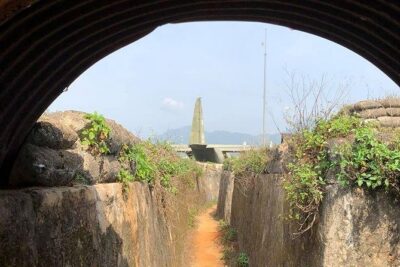
The tour description also includes time around abandoned bunkers in the city post-wars. This is not about dramatic reenactment. It is about facing the leftover infrastructure of conflict and understanding how quickly a city can move on, while still carrying reminders in the landscape.
This kind of stop can be a little heavier than market food or sightseeing, and I appreciate that the tour places it before you enter the citadel zone. It gives the emotional tone room to settle, so the next steps feel like continuation rather than whiplash.
Then you head into the citadel area, where the focus shifts from “what happened” to “what remained” and “how Hue represented power.”
Nine Cannons from Gia Long and the Flag Tower of the Nguyen Dynasty

The citadel section is where the tour gets visually memorable. You learn about nine cannons cast by Hue artisans in Gia Long’s second year (1803). The tour describes the nine cannons as among the most valuable bronze works of art, and it notes that the ancient nine cannons were placed at the foot of the Imperial area within the citadel context.
Even if you are not a military history person, this stop works because it connects art, engineering, and authority. Cannons are often discussed like only weapons, but here the emphasis is on craftsmanship and imperial display. That helps you see the citadel as both a defensive structure and a statement of power.
After that, you visit the Flag Tower, described as an architectural monument of the Nguyen Dynasty located within the Nam Chánh fortress area of the Hue citadel. The tour explains it as the place to hang the royal court flag. It is a small detail, but it changes how you read the architecture. You stop seeing it as stonework and start imagining what ceremonies and daily symbolism looked like.
Timing-wise, this is not a long museum visit. It is short, guide-led time in the most meaningful spots, and then you finish at Ngọ Môn Square. That ending works well because it closes the loop on imperial Hue and gives you a clear destination to regroup or continue exploring on your own after the tour ends.
Price and Value: How $25 Works Here

At $25 per person, this tour is priced like a budget-friendly walking option, but it is not just “pay for a guide.” Your package includes bottled water and an English-speaking guide, and the tour summary states it includes lunch or dinner. It also uses a mobile ticket, and the stops list admission tickets as free.
So the value comes from three places:
- You get guided interpretation, not self-guided guesswork
- You get food support (lunch or dinner), which usually costs real money in Hue
- You get a structured route that connects war-era sites to the city’s older political and cultural layers
Group size is also part of the value equation. With a maximum of 10 travelers, you are more likely to get real interaction and question time than on huge bus-style tours.
One more pricing reality check: because this is often booked in advance (it is commonly booked about 8 days ahead), if you have fixed dates, you should not wait for the last minute. Hue is a popular base, and small-group walks can fill up.
Who Should Book This Hue Revolution Tour (and Who Might Want Something Else)

I think this tour fits best if you like history you can walk to. You want context without sitting in one place for hours. You also want both the political unrest side and the war-impact side, not only one angle.
It is especially good for you if:
- You enjoy city-level storytelling, where bridges, markets, and monuments each play a role
- You want an English guide who can explain the why behind the visible landmarks
- You like a manageable group setting (max 10)
If you prefer slow pacing, lots of independent time, or deep museum-style study, you might find the short stop format a little intense. The tour is designed to cover key points in about 2.5 hours, so it is not meant to be a relaxed amble with endless detours.
Weather matters too. The tour requires good weather, and that is worth respecting. If you arrive in Hue with only rainy-day flexibility, you may need to pick the right slot.
Should You Book This Hue Revolution Walking Tour?
Yes, I would book it if your goal is to understand Hue as a city shaped by conflict, resistance, and the lingering symbols of power. The standout advantage is how the guide ties together different eras and themes, including the 1908 anti-tax story and the war-era impact on places like Truong Tien Bridge, then balances it with an actual market stop for finger fruit and sweet soup.
The main thing to get right is your footwear and your expectations. This is not a long sit-down experience. It is a focused walking route that moves, teaches, and feeds you. If that sounds like your style, $25 with a strong English guide and lunch or dinner is an easy value call.
FAQ
How long is the Hue Revolution Walking Tour?
It lasts about 2 hours 30 minutes.
Where do I meet the guide and where does the tour end?
You meet at DMZ Bar & Restaurant, 60 Lê Lợi, Phú Hội, Huế, and the tour ends at Ngọ Môn Square, Thuận Hòa, Huế.
What does the $25 price include?
The experience includes an English-speaking guide and bottled water, and the tour overview also says lunch or dinner is included. It also uses a mobile ticket.
Are there any admission fees at the stops?
The itinerary lists admission tickets as free for the stops shown.
Will we have a chance to try local food?
Yes. At Đống Ba Market, the tour specifically notes trying finger fruit and sweet soup.
How big is the group?
The maximum group size is 10 travelers.
What should I know about weather and cancellation?
The tour requires good weather. If it is canceled due to poor weather, you are offered a different date or a full refund. Cancellation is free up to 24 hours in advance for a full refund.
More Tours in Hue
- Easy Rider private tour via Hai Van pass from Hue – Da Nang – Hoi An (1Way|Loop)
★ 5.0 · 1,542 reviews


More Tour Reviews in Hue
- Easy Rider private tour via Hai Van pass from Hue – Da Nang – Hoi An (1Way|Loop)
★ 5.0 · 1,542 reviews


More Days Up in Hue
- Easy Rider private tour via Hai Van pass from Hue – Da Nang – Hoi An (1Way|Loop)
★ 5.0 · 1,542 reviews
Just added around Hue




Walking Tours, compared.
 ★ 5.0Hue: Imperial City Walk, Motorbike Tour & Private Car OptionsFrom $7732 reviews
 ★ 5.0Evening Walking Food Tour, folk game and lantern boatFrom $39665 reviews
 ★ 5.0Hoi An Ancient Town Walking Tour with a LocalFrom $9517 reviews
 ★ 4.9Hoi An Ancient Town – Walking Tour with Local GuideFrom $14385 reviews
 ★ 5.0Hoi An Street Food Walking Tour with TastingsFrom $35317 reviews
 ★ 4.8Hue Imperial Ancient City Walking TourFrom $2308 reviews
 ★ 5.0Hue Imperial City Walking Tour: Citadel & Forbidden CityFrom $9280 reviews
 ★ 5.0Hoi An Walking TourFrom $69269 reviews
Browse the lists this tour appears in