

REVIEW · HUE IMPERIAL CITY TOURS
Hue Imperial city walking tour and optional royal tombs
Hue can feel like history on foot. This Hue Imperial City walking tour turns UNESCO walls into a clear story of Vietnam’s Nguyen Dynasty court life.
I love how the guide focuses on meaning, not just facts, including the architectural logic behind the royal spaces and how the city functioned day to day. You’ll also see the Forbidden City’s key zones, like the Purple Forbidden City, with context you can actually use when you look around.
One consideration: the walking route is timed, and the entrance ticket is not included, so you’ll want to plan for the separate site fee.
Key highlights worth your time

- A 2.5-hour walking tour with a historian guide that makes the Nguyen Dynasty feel understandable
- UNESCO Hue Imperial City sights, including the Forbidden City areas most visitors miss in detail
- Court architecture explanations, including how design responded to practical realities, like wind and water
- Morning bonus option to catch the Changing Guard Ceremony at 8 am (if you book morning)
- Small group size for questions, pace, and a calmer visit
- Optional royal tombs if you want to extend the story beyond the palace walls
Over the pass and into the imperial city
- Hue Customizable Tour with Imperial Citadel & Forbidden City
★ 4.9 · 937 reviews - Hue :Exploring Royal City with Multi Options and Dragon Boat
★ 5.0 · 675 reviews - Hue City Tour Full Day – Group Tour
★ 4.7 · 518 reviews - From Hue: DMZ Tour with Vinh Moc Tunnels and Khe Sanh Base
★ 4.9 · 503 reviews
Walking into Hue’s Nguyen Dynasty world (and why it matters)

Hue’s Imperial City is one of those rare places where you can still read the rules of the past. The royal buildings are not random. They reflect hierarchy, belief, and everyday survival needs, all packed into one walled complex. When you walk with a guide, the scenes stop being just pretty courtyards and become a living chart of how the Nguyen court organized power.
The tour keeps a strong focus: why Hue became the capital, how the court worked, and what brought the dynasty down. That matters because without context, it’s easy to treat the Forbidden City like a museum layout. With context, you start noticing patterns: which buildings feel more formal, which spaces were meant for specific roles, and how the design supported ceremonies, movement, and control.
You also get a short, efficient format. At about 2.5 hours, you cover major highlights without spending your whole day stuck on a loop. It’s a good match for Hue’s real-life pace, especially when the weather is working against you.
Price and entrance logistics you should plan for
The tour price is listed at $26 per person, and it’s basically the guiding fee. The separate entrance ticket is 200,000 VND per person, and it’s not included in the tour cost. That means your real total is the tour fee plus the site ticket.
This is still good value, because the money buys more than walking access. You’re paying for an explanation-driven visit focused on Nguyen-era architecture and court life. If you go without a guide, you’ll still see the buildings, but you’ll spend more time guessing what you are looking at, and you’ll likely miss the “why” behind the layout.
One practical note for your schedule: this experience ends back at the meeting point, so you can keep your day organized afterward.
Where you meet, and the easiest way to avoid confusion

Meet at the 4-cannon side of the Nine Holy Cannons. The guide will be waiting there, and the 5-cannon is on the opposite side. This is simple, but it helps to know the orientation in advance, since “Nine Holy Cannons” can sound like a named landmark rather than a literal meeting spot.
You also get a WhatsApp text from the guide before you meet. That kind of check-in saves time and stress, especially if you are juggling heat, photos, and trying to find the right entrance to the complex.
More hours inside the Citadel walls
- From Da Nang/Hoian/Hue: Hue Imperial City Full-Day Tour★ 4.8 · 295 reviews
- Hue Imperial City Walking Tour: Citadel & Forbidden City★ 4.8 · 245 reviews
- Hue Imperial Citadel, Tombs, Perfume River Boat Tour & Van★ 4.8 · 76 reviews
- Hue Imperial City and Forbidden City Walking Private Tour★ 4.9 · 42 reviews
- Chan May Port : to Golden Bridge/Imperial City/Hoi An Town★ 5.0 · 41 reviews
Inside the Imperial Citadel: the key stops you’ll make sense of

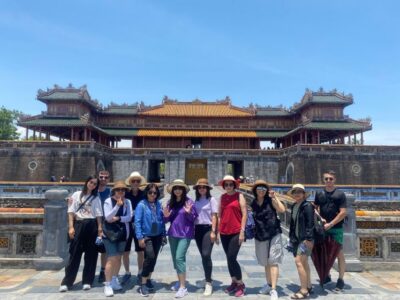
The tour is built around the royal areas you most want to understand. You’ll explore the Hue Imperial City, a UNESCO site recognized since 1993, and you’ll also spend time in the Forbidden City zones where the Nguyen court performed power in a very controlled way.
Here are the main stops you’ll encounter, and what they mean when you learn them in order.
Ngo Mon Gate area and the morning Changing Guard bonus
If you book the morning tour, you may be able to watch the Changing Guard Ceremony at 8 am in front of Ngo Mon Gate. Even if you’re not a ceremony person, it gives you an instant feel for the court’s performance of order.
Practical tip: if you’re sensitive to heat, the morning slot is often easier than midday. Hue can be hot and humid in summer (May to August), so getting an early start can make your whole day feel lighter.
Hien Lam Cac Pavilion: a place for power and ceremony
The Hien Lam Cac Pavilion is one of the recognizable royal structures inside the wider Imperial Citadel. With a guide, you don’t just identify it. You learn how pavilion spaces fit court rituals and how they signal status. The Nguyen court was careful about where people stood, where ceremonies happened, and how authority was visually framed.
Why this stop matters: it’s a “reading practice” for the rest of the complex. Once you understand how the pavilion fits court life, the other buildings stop looking like disconnected monuments.
Mieu Temple: belief expressed in space
The Mieu Temple brings in the spiritual layer of the dynasty. Temples in royal compounds often work as more than religious architecture. They reinforce legitimacy and memory, connecting rulers to ancestors and the dynasty’s claimed moral order.
The guide’s job here is to help you connect the dots between form and function. The temple setting teaches you how the Nguyen court used sacred space to strengthen authority.
Queen Mother Residence: understanding the hierarchy behind the walls
You’ll also visit the Queen Mother Residence. This is where hierarchy becomes personal. In many dynasties, power can be visible in ceremonies, but influence also lives in household structure, access, and proximity to the throne.
A good guide will explain how this residence shaped daily court life and status. You learn why some areas feel more restricted, and why certain rooms and corridors existed for particular roles.
Purple Forbidden City: the heart of the restricted core
The center-stage area is the Purple Forbidden City, which includes Kien Trung Palace and the Royal Garden. Even if you’ve seen photos, the scale and the feeling of enclosure hit differently in person. You are moving through layers meant to limit visibility and control movement.
What I like about having a guide at this point is the pacing. You get time to look, but you also get a story that keeps you from getting lost in the visual details.
- Kien Trung Palace is where you feel the formal center of power, and the guide helps you interpret the architecture as a political tool.
- Royal Garden adds a different angle. Gardens in imperial compounds are not just scenery. They reflect taste, control, and daily life planning inside a restricted world.
How the guide ties architecture to real constraints
One of the strongest, most memorable parts of this tour is the way the guide connects architecture to practical realities. In particular, you may hear explanations about engineering choices related to flood water and wind currents. That’s a big deal because Hue’s environment is not optional. The region’s weather and water patterns forced the dynasty to think in engineering terms, not only in aesthetics.
This kind of explanation is exactly why a guided walk is worth paying for. When you notice how a building accounts for real conditions, you start understanding the dynasty as an organization that solved problems, not just a fantasy of palace intrigue.
Why Hue was chosen, and what the Nguyen Dynasty was really dealing with

The tour’s big story is why Hue became the capital under the Nguyen Dynasty (1802 to 1945). The guide also covers the influences on construction, and you’ll hear discussion that can include questions like whether feng shui or weather conditions played a bigger role.
Then the tour doesn’t stop at the “glory” part. It covers the dynasty’s downfall, so you leave with the sense that history moved for reasons, not just dramatic endings.
This balanced approach helps you avoid a common trap. If you only focus on grandeur, you miss how fragile power is. If you only focus on downfall, you miss how people built institutions and tried to make them last.
What you get from a small group (and why it helps your photos too)

The tour is a small group, which matters more than many people expect. With a smaller group, the guide can slow down when you have questions. You are also less likely to get carried along by someone else’s pace.
That also affects your photos. You can pause to look at building details, without the constant feeling that you are falling behind. You get a better chance to read the design instead of just capturing it.
Your guide: the difference between facts and real understanding
The most praised part of this experience is the guide quality. Names that show up in real-world experience include Matthew, Dang, and Tom. What they share is clear English, strong explanations, and a teaching style that makes court history feel organized instead of overwhelming.
I like the way these guides can “zoom out” and then “zoom in.” You may hear palace intrigue framed in plain language, then see how that intrigue linked to actual building choices and movement rules inside the citadel.
If you prefer a more personal tone, some guides also adjust to your interest level. If you want engineering details, they can lean that way. If you care more about court roles, they can focus on hierarchy and who had access where.
Optional royal tombs: extending the story beyond the palace walls

This tour is built around the Imperial City and Forbidden City. But the overall experience can expand with optional royal tombs if you want to keep the Nguyen story going after the walking part.
I like this add-on idea because royal tombs complete the timeline. The palace is about life, ceremonies, and authority in action. Tombs shift you to memory, legitimacy, and how rulers wanted to be remembered.
If you choose the tomb add-on, expect the second portion of your day to feel more reflective than ceremonial. It’s a good pairing with a Hue visit, because it makes the architecture and symbolism feel less random and more consistent across the landscape.
Practical tips for your best day in Hue

Hue weather is the wildcard. In May to August, it tends to be hot and humid, so bring more water than you think you need. Wear light, breathable clothing, and keep a small towel or tissue on you, since you will be outside.
Also, plan your entry with the separate entrance ticket in mind. If you arrive ready to pay the site fee, you avoid a time crunch that can stress the rest of your route.
Finally, wear shoes that handle stone and busy walkways. The tour is not long, but you’ll likely move continuously for about 2.5 hours.
Should you book this Hue Imperial City walking tour?
Yes, book it if you want more than sightseeing. The guide-led approach turns the Imperial City into a readable story of the Nguyen court, with strong attention to architecture and why these spaces were designed the way they were. The small group format also makes it feel relaxed, not rushed.
Skip it or consider another option only if you prefer to wander alone with no structured explanations. You’ll still see beautiful buildings, but the main value here is the guided interpretation, especially around the Forbidden City and the Nguyen-era logic behind the layout.
If you’re planning a Hue trip and want one focused, high-value morning or afternoon activity, this is a very solid choice.
FAQ
How long is the Hue Imperial city walking tour?
The tour lasts about 2.5 hours and includes a walking experience through the Imperial City and Forbidden City areas.
Is the entrance ticket included in the tour price?
No. The entrance ticket is not included, and it is listed as 200,000 VND per person.
Where do I meet the guide?
You meet at the 4-cannon side of the Nine Holy Cannons. The 5-cannon is on the opposite side.
What happens if I book the morning tour?
If you book the morning tour, you can watch the Changing Guard Ceremony at 8 am in front of Ngo Mon Gate.
What language is the tour guide?
The tour is available in English.
Is this a small group tour?
Yes, it is described as a small group to support better tour quality.
Can I add optional royal tombs?
Yes, royal tomb visits are listed as an optional part of the experience title, so you can extend your trip with tombs if you choose.
More Tombs Along the River


More Time Inside the Citadel


More Days Up in Hue


Just added around Hue Vietnam




Hue Imperial City Tours, compared.
 ★ 4.9Hue Customizable Tour with Imperial Citadel & Forbidden CityFrom $12937 reviews
 ★ 4.7Da Nang/Hoi An: Hue Imperial City via Hai Van Pass & LunchFrom $9753 reviews
 ★ 5.0Hue: Imperial City Walk, Motorbike Tour & Private Car OptionsFrom $7732 reviews
 ★ 5.0Hue City and The Citadel via Hai Van Pass Daily Small Group TourFrom $43362 reviews
 ★ 5.0Hue Citadel tour by authentic Train via Hai Van Pass from Da NangFrom $46337 reviews
 ★ 4.8From Da Nang/Hoian/Hue: Hue Imperial City Full-Day TourFrom $31295 reviews
 ★ 5.0Hue Imperial City Walking Tour: Citadel & Forbidden CityFrom $9280 reviews
★ 4.8Hue Imperial City Walking Tour: Citadel & Forbidden CityFrom $11245 reviews
★ 5.0Hue Imperial City Walking Tour: Citadel & Forbidden CityFrom $9280 reviews
★ 4.8Hue Imperial City Walking Tour: Citadel & Forbidden CityFrom $11245 reviews
Browse the lists this tour appears in