

REVIEW · HUE IMPERIAL CITY TOURS
Hue Imperial City Walking Tour: Citadel & Forbidden City
Hue’s royal walls make sense when someone narrates them. On this Hue Imperial City walking tour, I love how a guide like Ngoc turns the Nguyen Dynasty into a story you can picture, and how you learn the layout by walking through the big gates and palaces instead of guessing on your own. You’ll also get real context for why the city was built the way it was, not just pretty architecture on a cloudy afternoon.
My main consideration is that it’s a walking route and it is not suitable for wheelchair users. It can also take a while because the grounds are huge and the stops are spread out.
Key highlights you will feel right away

- Ngo Mon Gate entry: you start at the ceremonial threshold, so the whole complex clicks faster.
- Thái Hòa Palace staging: you see the main political theater of the citadel, then learn the symbolism.
- The Mieu Temple rules: you’ll understand why worship was restricted to certain emperors.
- Kien Trung Palace in the Forbidden City: it’s easier to grasp the royal family’s world when you stand where they lived.
- Royal Library and Royal Garden finish: the tour ends where quiet study and curated nature fit the court image.
- Pace tuned for real viewing: many guides manage time so you can pause for photos and questions.
Over the pass and into the imperial city
- Hue Customizable Tour with Imperial Citadel & Forbidden City
★ 4.9 · 937 reviews - Hue :Exploring Royal City with Multi Options and Dragon Boat
★ 5.0 · 675 reviews - Hue City Tour Full Day – Group Tour
★ 4.7 · 518 reviews - From Hue: DMZ Tour with Vinh Moc Tunnels and Khe Sanh Base
★ 4.9 · 503 reviews
Why the Hue Imperial City makes more sense with a guide

Hue’s Imperial City is not one neat building. It is a whole system of walls, gates, courtyards, and ceremonial spaces built to control movement and rank. If you walk it alone, you can still enjoy the scenery, but you will probably miss why each area matters.
On this tour, the guide connects architecture to the people who used it. I like that you are not stuck with a lecture. You are walking from place to place, so each story has somewhere to land. That is exactly why a guide makes a difference here, even if you already like history.
I have also noticed the strongest praise from past guests comes from communication and pacing. People mention guides like Nhien and Ha putting history into clear, calm explanations, then answering questions as you go. That matters because the Imperial City can feel confusing fast if you do not have a way to organize what you see.
Meeting at the Cannons, and how not to waste time on arrival
You start at a very specific spot, and it is worth getting right. On Google Maps, the area shows Nine Holy Cannons, but the meeting point is at the four cannons location. The guide waits there, so you are not playing a guess game for long.
Two practical tips help:
- Bring your phone and make sure you can access WhatsApp. The guide may send a Google map pin to help you locate the exact meeting spot.
- If you choose hotel pickup, you must provide your WhatsApp number and hotel name so the driver and guide can line it up.
Also, check the time window. The tour duration can vary from about 150 to 330 minutes depending on your departure and how the group moves. If you are planning other activities that day, give yourself a buffer.
Ngo Mon Gate to Thái Hòa Palace, where the court shows its power

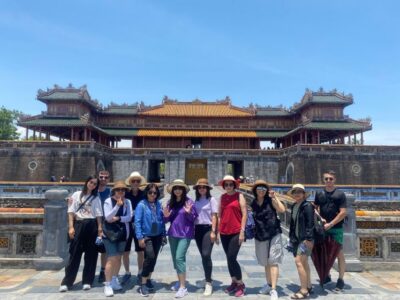
The tour begins with a photo stop at Cửa Ngọ Môn, also written as Ngo Mon Gate. Starting here is smart. This is not just a gateway you pass through. It is the ceremonial entrance, and the guide uses it to explain how power was performed.
From there, you move to Thái Hòa Palace (Harmony Palace). This is one of the key set pieces inside the Imperial City, and it is where the court’s “stage” feeling becomes obvious. You get to see the structure and understand why it is designed for official gatherings, not everyday life.
What you should watch for:
- The way the buildings frame the ceremonial route. You are learning the city’s choreography, not just the names.
- The contrast between major ceremonial space and smaller supporting areas nearby.
This is one of the stops that tends to get singled out in praise, because a good guide turns it from an interesting photo into a usable mental map of how Hue’s court operated.
More hours inside the Citadel walls
- From Da Nang/Hoian/Hue: Hue Imperial City Full-Day Tour★ 4.8 · 295 reviews
- Hue Imperial City Walking Tour: Citadel & Forbidden City★ 4.8 · 245 reviews
- Hue Imperial Citadel, Tombs, Perfume River Boat Tour & Van★ 4.8 · 76 reviews
- Hue Imperial City and Forbidden City Walking Private Tour★ 4.9 · 42 reviews
- Chan May Port : to Golden Bridge/Imperial City/Hoi An Town★ 5.0 · 41 reviews
The pavilions and gates, plus a timed break that keeps the tour enjoyable

After Thái Hòa Palace, the route continues through more important points, including Hien Lam Pavilion and other sections of the Imperial City where the guide adds context. You will have short photo stops and quick visits, and that structure works well here because you keep your momentum while still getting explanations.
You’ll also reach Cửa Chương Đức. Gates like this are one reason the Imperial City feels like a designed system rather than random buildings. They helped control access and created clear boundaries for different ranks and roles.
At some point, there is a break time. Even if you love walking, take this seriously. Hue’s heat and humidity can wear you down quickly, and you will do a better job absorbing the story if you are not running on fumes.
Quick comfort rule:
- Bring a hat and water if you can. Food and drinks are not included, so plan to buy along the way if you need a snack.
The Mieu Temple stop, where worship rules explain the politics

One of the more intriguing parts is the Mieu Temple. The tour includes it specifically to explain why some emperors were not allowed to be worshiped inside. That detail is small on the surface, but it opens the door to understanding court politics and legitimacy.
In plain terms, the imperial system was not only about who ruled in the moment. It was also about who deserved honor afterward. When you hear this explanation while standing in the temple space, it becomes easier to grasp how the court controlled memory, not just territory.
This is also where I think you get the best payoff from asking questions. If you are curious about how dynasties handle conflict and succession, the guide can usually connect the architectural purpose to historical power struggles. Past guests often highlight that guides can answer questions thoroughly, and this temple stop is a good place to use that.
Entering the Forbidden City atmosphere at Kien Trung Palace

Next comes the Forbidden City area. The tour takes you there to admire Kiến Trung Palace (Kien Trung Palace), described as a residence space for the king’s family.
Even if you have seen palace rooms in other countries, this one hits differently because of the surrounding layout. The Forbidden City sections are about privacy and control, so the atmosphere feels more contained than ceremonial outer spaces. With a guide, you can understand what you are looking at rather than just walking through open courtyards.
At this stage of the tour, I recommend slowing your pace just a bit. You do not need to sprint between stops. Use the guided context to help you notice patterns: transitions from one space type to another, shifts in how open areas connect to formal buildings, and the way the complex creates boundaries.
If you like photography, this is also a strong moment. Some guests mention their guides helped with angles and photo-friendly viewpoints, which makes sense because the palace grounds offer lots of symmetrical sightlines.
Finishing with Thiệu Phương Garden, royal theater, and the study spaces

The tour continues with several mid-route highlights, including:
- Thiệu Phương Garden, a quieter scenic stop that gives your eyes a break from stone and ceremony.
- Duyệt Thị Đường Royal Theater, where the palace image expands beyond rule and punishment into performance and court culture.
- Thai Bình Pavilion and additional photo stops along the way, used to keep the route moving while still tying visuals to explanations.
You also end at the Royal Library and the Royal Garden, then you leave the Imperial City grounds for the final drop-off at Hue, Cửa Hiển Nhơn.
That ending matters. Many tours stop at the “big palaces” and call it a day. Here, the finish leans into the court’s idea of refinement: study, recorded knowledge, and curated nature. Even if you are not a “garden person,” it helps you understand how the Nguyen court wanted to look and feel, not just how it governed.
If you have time after the tour, stay mentally in that mode. Your brain will connect the final stops to what you saw at Ngo Mon Gate and Thái Hòa Palace, and the whole complex will feel less like a checklist.
Price and value: what $11 actually buys you

At $11 per person, the math is pretty straightforward. The guide and the walking tour are included, and the money you pay is mostly for expert time and guidance through a large, confusing site.
The tradeoff: entry tickets are not included. So you should expect to pay the official admission separately. That said, the price still often feels like good value because you are buying context for a complex that would otherwise take far more effort to decode on your own.
Also consider the tour length. With a duration that can run from around 2.5 hours up to more than 5 hours, you are paying for a lot more than “a quick walk.” The best tours here are the ones that respect pacing, and the strong feedback you see is exactly about guides keeping a comfortable rhythm, staying on time, and still leaving room for questions.
Pace, weather, and what to bring for a comfortable walk

This is a walking tour through palace grounds, so think like you are doing a sight-heavy half day. Even when it is not hot enough to sweat heavily, you will likely be on your feet longer than you expect.
Bring:
- Comfortable shoes with grip.
- Water and a light snack, since food and drinks are not included.
- A hat or umbrella for sun or sudden rain.
Rain happens in Hue. One nice detail from past experiences is that guides handled weather well by adjusting the feel of the day, while still keeping the tour moving. Still, you are the one doing the walking, so you should dress like the route is outdoors for a while.
And if you care about photos, good light can be unpredictable. Plan to shoot at the photo stops, but also remember that some of the best pictures come when you pause after the guide explains where you are standing. That moment of understanding helps you frame shots better.
What group type is best for you
This tour offers private or small groups. In practice, that choice affects how much time you get to talk and ask questions.
You should consider this tour if:
- You want names and systems, not just random facts.
- You like architecture and want to understand how it supported court life.
- You enjoy guided storytelling, the kind that connects a gate name to court rules and daily behavior.
You might skip or switch plans if:
- You use a wheelchair. The tour is not suitable for wheelchair users.
- You strongly prefer solo wandering with no structured explanations. You can enjoy parts on your own, but you will miss why the complex is laid out the way it is.
Should you book this Hue Imperial City walk?
Yes, book it if you want your Hue visit to feel organized and meaningful. The strongest reason is simple: the Imperial City is huge, and it rewards a guided approach. When a guide can explain how spaces worked and why worship and residence mattered, you end up with a mental map that makes future sites easier to understand.
I would especially recommend it if you are pairing this stop with other Hue sights. After this tour, even a casual walk outside the guided route can feel clearer because you will recognize patterns, gate functions, and the logic behind the palace layout.
Final decision checklist:
- Want the Nguyen Dynasty story tied to what you actually see? Book this.
- Need wheelchair access? Look for a different format.
- Hate buying tickets separately? Budget a bit extra for entry admissions.
If you do book, choose a small-group or private option if that fits your budget. It tends to make the pacing calmer, and it gives you more time to ask the questions that turn palaces into real history.
More Tour Reviews in Hue Vietnam


More Time Inside the Citadel


More Days Up in Hue
Just added around Hue Vietnam





Hue Imperial City Tours, compared.
 ★ 4.9Hue Customizable Tour with Imperial Citadel & Forbidden CityFrom $12937 reviews
 ★ 4.7Da Nang/Hoi An: Hue Imperial City via Hai Van Pass & LunchFrom $9753 reviews
 ★ 5.0Hue: Imperial City Walk, Motorbike Tour & Private Car OptionsFrom $7732 reviews
 ★ 5.0Hue City and The Citadel via Hai Van Pass Daily Small Group TourFrom $43362 reviews
 ★ 5.0Hue Citadel tour by authentic Train via Hai Van Pass from Da NangFrom $46337 reviews
 ★ 4.8From Da Nang/Hoian/Hue: Hue Imperial City Full-Day TourFrom $31295 reviews
 ★ 5.0Hue Imperial City Walking Tour: Citadel & Forbidden CityFrom $9280 reviews
 ★ 4.5From Hoi An/Da Nang: Hue Imperial City Tour via Hai Van PassFrom $45156 reviews
Browse the lists this tour appears in