

REVIEW · HUE IMPERIAL CITY TOURS
Hue Walking Tour: Explore The Imperial City & Tour Guide
Imperial Hue, on foot, makes the past real. You get a focused 2 to 2.5 hour walk through the heart of the Nguyen Dynasty’s Imperial City, where gates and palaces explain power in stone, wood, and bronze. It’s built around the Nine Holy Cannons theme, so you’re not wandering randomly.
I love the ticket help and quick start. Your guide meets you at Cuu Than Cong in Cua Ngan, then helps you get the Imperial City admission sorted before you begin walking. I also love the human touch you can feel in the guide approach, especially the English delivery style associated with guides like Austin, Ha, and Duyen, plus the bottled water included to keep you moving.
One consideration: the Imperial City entrance ticket is not included, so you will need to budget 200,000 VND per person on top of the $22 tour price.
Key highlights I think you’ll care about

- Ticket assistance at the start so you waste less time figuring out admissions
- Nine Holy Cannons route that links key gates, palaces, and symbolic structures
- Specific architecture facts you can picture (like the Flag Tower rebuild history and bronze urn artwork)
- Meaningful stops beyond the main gate including Dien Tho Palace, Thieu Phuong Garden, and the Mieu Temple
- Real-world context at reconstruction sites like Kien Trung Palace, rebuilt in 2019 with completion planned later
- A tight 2 to 2.5 hour format that’s ideal for a first visit, not a full day project
Over the pass and into the imperial city
- Hue to Hoi An ( Hoi An to Hue) Top Gear with Lefamily Riders Tours ( 1 way)
★ 5.0 · 3,156 reviews - Easy Rider private tour via Hai Van pass from Hue – Da Nang – Hoi An (1Way|Loop)
★ 5.0 · 1,542 reviews - Easy Rider From Hue Da Nang Hoi An Via Hai Van Pass With Mister T
★ 5.0 · 769 reviews - Hue to Dn/Hoi An: Hai Van Pass, beaches & Mt Monkey or vice versa
★ 5.0 · 743 reviews
How the Hue Imperial City walk actually runs

This is a practical, guided walk through the Imperial City area in Hue. The experience is set up for either a morning or afternoon session, and it runs about 2 hours 30 minutes. That matters because the Imperial City is big, and an unguided stroll can turn into stop, start, and guesswork.
You’ll meet in the Hue Historic Citadel area, with the tour starting at Cuu Than Cong in Cua Ngan. If pickup is offered for your session, you can plan to be collected, then dropped into the right flow. Once you’re with your guide, you get help purchasing the Imperial City ticket so you can keep momentum.
The tour is private for your group, not a mixed shuffle. That’s a big deal for a place like Hue because you’ll have more chances to ask questions about what you’re seeing, not just follow along silently.
Cost-wise, the tour price is $22 per person, and it includes an English speaking guide plus bottled water. The main extra cost is the Imperial City admission ticket, discussed next.
Price and logistics, without the guesswork
The headline price is $22, which covers the guide and water, plus the use of a mobile ticket. What’s not included is the Imperial City entrance fee: 200,000 VND per person.
Here’s how to think about value. A guided route like this can save you time and confusion, especially when multiple structures have different entry rules or when you want someone to connect the dots between the Noon Gate, the throne palace, and the ceremonial objects. You’re paying for interpretation and a structured walk, not for museum-level extras.
Also remember the time commitment. At roughly 2.5 hours, you should expect short stops and a guided storyline. If you want to linger for long photo sessions or read every sign slowly, this format may feel a bit fast. It’s built for clarity and momentum.
My practical advice: if you can, aim for comfortable shoes, and bring your patience for crowds at the major photo spots. The tour is efficient, and that’s usually what makes it feel so satisfying.
Starting at Nine Holy Cannons and the view of royal power
The tour’s opening is at the Nine Holy Cannons area in Cua Ngan, starting the day with the idea that this complex is not random. The “cannons” theme is a way to organize the Imperial City’s key points, and the guide uses it to give you a simple mental map fast.
Right away, you’ll get help with the Imperial City ticket acquisition, then move into the walking sequence. The value here is not only logistics. It’s that you start with context, so the first gate and tower you see later feel connected instead of isolated.
One interesting detail from this route is that the tour isn’t just about gates. You’ll also see objects and spaces designed for ceremony, memorial, and royal private life. That’s what makes it feel more complete than a “look at palace, take photos, leave” plan.
If you’re someone who likes structure, you’ll appreciate that the guide’s story gives each stop a reason to exist, not just a label.
More hours inside the Citadel walls
- Hue: Imperial City Walk, Motorbike Tour & Private Car Options★ 5.0 · 732 reviews
- Hue Imperial City Walking Tour: Citadel & Forbidden City★ 5.0 · 280 reviews
- Hue Imperial City Walking Tour (Kids Half-Price)★ 5.0 · 133 reviews
- Hue Imperial City Walking Tour 2.5 Hours★ 5.0 · 42 reviews
- Hue Imperial City Walking Tour maximum 12 pax★ 5.0 · 31 reviews
Flag Tower: the skyline marker with a rebuild story

Next comes the Flag Tower (Kỳ Đài Huế), a structure built in 1807 that originally stood 30 meters tall. It suffered damage from artillery and was later rebuilt in 1948, reaching 37 meters.
This is one of those stops where a guide turns architecture into a timeline. Even if you only have a few minutes here, you can look up and understand that the tower is not just decoration. It’s a marker for authority, ceremonies, and state presence.
For planning, this is a quick stop, about 10 minutes. So don’t expect long explanations only through reading. The real value is hearing the story in real time, then taking a couple of photos with the tower’s role in mind.
If you like a compact stop that still has real substance, this one delivers.
Noon Gate and Ngu Phung Pavilion: where the king had the entrance

The Noon Gate (Ngọ Môn Huế) is the main gate of the Hue Imperial area, built in 1833. The key detail is also the dramatic one: the entrance was for the king.
On top of the gate, you’ll find the Ngu Phụng Pavilion (Lầu Ngũ Phụng), a standout bit of architecture that sits above the gate. It’s easy to walk through a gate and forget it has meaning, but this stop is designed to prevent that. The guide helps you notice how the placement and structure communicate rank.
Your time here is about 10 minutes, with the gate moment usually being the photo moment. What makes it worthwhile is that you can understand the gate as a symbol of controlled access, not just a big entrance.
Not included admission can apply at specific structures, so watch for what your ticket covers. In practice, the guide handles the flow so you don’t get stuck trying to figure it out mid-walk.
Thái Hòa Palace and the throne focus

One of the core stops is Thái Hòa Palace (Điện Thái Hòa), described as the most important palace in the Hue Imperial complex, where the throne is located. It’s a clear symbol of the Nguyen Dynasty’s power.
This is where the story shifts from gates and views into state performance. Palaces like this were designed so that ceremony and authority were unavoidable. Even if you’re not a history fanatic, the guide’s explanation usually helps you see why people built the space to work like a stage.
Time here is about 10 minutes. That might sound short, but it’s enough to get the key idea and take a couple of photos that show scale.
If you’re the type who wants the “why” behind what you see, this stop is a highlight. If you want very detailed time inside rooms, this may feel too quick. This walk is a broad map with storytelling, not a slow, room-by-room exploration.
Duyet Thi Duong Theater: royal architecture with a living element

Inside the Imperial City complex, you’ll also reach the Duyet Thi Duong Royal Theater (Duyệt Thị Đường). It’s an ancient theater with royal architecture, and it’s noted that performances with royal acts are still conducted.
What I like about including a theater stop is that it expands the Imperial City story beyond power and into culture. Thrones matter, but so does ceremony, performance, and the way the state presented itself.
You’ll have about 15 minutes here, which is longer than many other points on the route. That extra time helps you actually look, not just pass through.
One practical thought: if you’re visiting on a day when performances are not happening, you’ll still get the architecture and context, but the “living” element may be limited. The guide can help manage expectations on the spot.
Kien Trung Palace: reconstruction you can see in real time

A standout stop for current-day context is Kiến Trung Palace (Kien Trung Palace). It was built in 1923 with a combination of Asian and European architecture. It collapsed in 1947, then was rebuilt in 2019, with completion expected later, not finished until 2024.
This is one of those places where you learn to separate romance from reality. The Imperial City is not a frozen museum. It’s still being restored, and you can see that work in progress.
Time is about 15 minutes. That’s enough to understand why it was rebuilt, and how that affects what you see today.
If you care about heritage preservation, or you simply like seeing how history continues after damage and war, this stop will feel surprisingly relevant.
Dien Tho Palace and the quieter side of royal life
Next is Dien Tho Palace (Cung Diên Thọ), described as a private place for the king’s mother, built in 1804. A key detail: it’s one of the buildings inside the Imperial City that remained intact during the war.
This stop changes the emotional tone. It’s still royal, but it’s more personal. You’re not just imagining public authority, you’re stepping into family and support systems around the throne.
Time is about 10 minutes. It’s a good length for a meaningful pause, especially after more ceremonial spaces.
Also, because this building is noted for surviving wartime damage, it offers a strong “continuity” feeling. You’re looking at something that has more intact lineage than some other reconstructed structures on the grounds.
Thieu Phuong Garden and Hien Lam Pavilion: beauty and memory
Thieu Phương Garden is about 8,000 square meters, surrounded by gardens and brick walls. Gardens within palaces and citadels often weren’t just for looks. They were for controlled calm, for walking, resting, and the softer side of royal daily life.
Then you’ll encounter Hien Lam Pavilion, described as a three-storey royal architecture structure built on a rectangular brick-tiled block. It’s framed as a memorial and a place remembering the merits of the Nguyen Kings.
There’s also extra detail that helps you notice what’s easy to miss: the pavilion has two stone staircases, each with 9 steps, and the stair holders are decorated with dragon patterns.
Time around these stops is about 10 minutes, which means the guide will likely point out the specific elements worth your attention.
If you’re the type who enjoys symmetry and design details, this is where you can slow down a bit through the explanation, even if the overall route stays fast.
The Mieu Temple and the shrine corner of the complex
The Mieu Temple (To Mieu, often called The Mieu) is described as a general shrine to the kings of the Nguyen Dynasty. It’s located in the southwest corner of the Imperial Citadel.
What makes this stop important is that it shifts the tour from power display to remembrance. A shrine is not about ruling now. It’s about honoring the past and reinforcing a line of legitimacy.
Time is about 10 minutes. That’s enough to understand the shrine’s role and then notice the quiet mood of the space compared with the larger ceremonial gates.
If you want the Imperial City story to include belief and memorial practices, this temple gives you that missing piece.
Nine Dynastic Urns: bronze art with 162 images
One of the most specific and fascinating stops is the Nine Dynastic Urns (Cửu Đỉnh Huế). These are bronze works tied to the reign of King Minh Mang. The important detail is that they depict images of Vietnam at that time, and there are 162 images in total.
This is the kind of object you appreciate more when a guide tells you what you’re supposed to look for. Even without spending hours reading, you can understand that these urns were meant to represent the world of the dynasty, not just decorate space.
Time is about 10 minutes, so you won’t have a museum-style experience here. But if you like symbol-rich objects, the urns often become the stop you remember most because the details are concrete and countable.
If you’re traveling with someone who needs “hands on” history, this is a great compromise. It’s tangible, visual, and packed with meaning.
The Forbidden Purple City and Thái Bình Lâu: finishing the nine-cannon circuit
The tour is built around the Nine Holy Cannons theme, so you’ll also pass through spaces associated with the Forbidden Purple City (Tử Cấm Thành Huế) and the wider ceremonial circuit that includes Thái Bình Lâu (Thái Bình Lâu).
The Forbidden Purple City is where the Imperial narrative turns more restrictive and layered, tied to the idea of inner spaces that were not for everyone. Even if you can only see parts from certain angles, the guide’s framing helps you understand why this area feels different from the more public-looking gates.
For Thái Bình Lâu, you may get more of a context explanation than a long stay, since the route is designed for efficient coverage. But including it matters because it keeps the tour aligned with the nine-point structure, instead of turning into a random walk of impressive-looking buildings.
This finishing stage is about tying the story together. When the route ends, you should feel like you can name what you saw, and more importantly, explain why it mattered.
Who this tour suits best, and who should skip it
This Hue Imperial City walking tour is a strong fit if you:
- want a guided overview of the Imperial City without spending the whole day
- like learning the meaning behind gates, palaces, and symbols
- prefer an English speaking guide to connect details for you
- enjoy photo moments with a clear route so you do not waste time
It may be less ideal if you:
- want to spend a lot of time inside each building with deep, slow reading
- dislike structured routes and short stops
- are hoping for a ticket-free experience, since the Imperial City admission fee is extra
Given the private group setup and the tight time window, it works well for couples, solo travelers, and small groups who want direction and good storytelling.
Should you book Hue’s Imperial City walking tour?
I’d book it if you want a confident first visit to Hue’s Imperial core with a guide who can make complex spaces feel understandable. For $22, the biggest value is not only the walk itself, it’s the ticket help, the English explanation, and the way the route hits major symbols like the Noon Gate, Thái Hòa Palace, the Forbidden Purple City zone, and the Nine Dynastic Urns with 162 images.
You just need to plan for the extra entry cost of 200,000 VND per person. Once you account for that, the experience feels like good use of time. If you’re only in Hue for a short stretch and want your Imperial City visit to feel meaningful, this is one of the smarter ways to do it.
If you have a bit more time and you enjoy unstructured wandering, you could also consider mixing this with slower independent sightseeing. But for many people, this is the easiest path to seeing the right things and understanding them fast.
FAQ
Do I need to buy the Imperial City entrance ticket separately?
Yes. The tour price ($22) does not include the Imperial City entrance ticket. The fee listed is 200,000 VND per person.
How long is the walk in Hue?
The tour lasts about 2 hours 30 minutes, with flexibility for either a morning or afternoon session.
What is included in the $22 per person price?
Included are an English speaking guide and bottled water.
Is pickup offered?
Pickup is offered for this experience, depending on your session.
Where do we meet for the tour?
The meeting point is in the Hue Historic Citadel area, and the tour starts at Cuu Than Cong in Cua Ngan.
Is the tour private?
Yes. It is described as private, with only your group participating.
Does the tour use a mobile ticket?
Yes. A mobile ticket is included.
Can I cancel and get a full refund?
You can cancel for a full refund if you cancel up to 24 hours in advance of the experience start time.
Is the tour suitable for most people?
The info provided says most travelers can participate.
More Tour Reviews in Hue
- Easy Rider private tour via Hai Van pass from Hue – Da Nang – Hoi An (1Way|Loop)
★ 5.0 · 1,542 reviews


More Time Inside the Citadel


More Days Up in Hue
- Easy Rider private tour via Hai Van pass from Hue – Da Nang – Hoi An (1Way|Loop)
★ 5.0 · 1,542 reviews
Just added around Hue
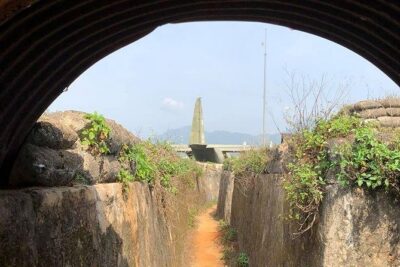


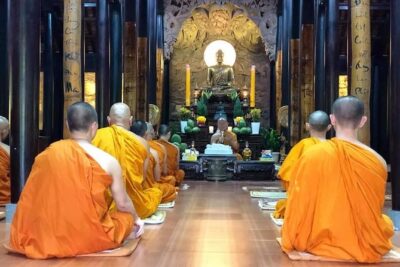

Hue Imperial City Tours, compared.
 ★ 4.9Hue Customizable Tour with Imperial Citadel & Forbidden CityFrom $12937 reviews
 ★ 4.7Da Nang/Hoi An: Hue Imperial City via Hai Van Pass & LunchFrom $9753 reviews
 ★ 5.0Hue: Imperial City Walk, Motorbike Tour & Private Car OptionsFrom $7732 reviews
 ★ 5.0Hue City and The Citadel via Hai Van Pass Daily Small Group TourFrom $43362 reviews
 ★ 5.0Hue Citadel tour by authentic Train via Hai Van Pass from Da NangFrom $46337 reviews
 ★ 4.8From Da Nang/Hoian/Hue: Hue Imperial City Full-Day TourFrom $31295 reviews
 ★ 5.0Hue Imperial City Walking Tour: Citadel & Forbidden CityFrom $9280 reviews
★ 4.8Hue Imperial City Walking Tour: Citadel & Forbidden CityFrom $11245 reviews
★ 5.0Hue Imperial City Walking Tour: Citadel & Forbidden CityFrom $9280 reviews
★ 4.8Hue Imperial City Walking Tour: Citadel & Forbidden CityFrom $11245 reviews
Browse the lists this tour appears in