

REVIEW · HUE IMPERIAL CITY TOURS
Hue Imperial City Walking Tour maximum 12 pax
Royal Hue unfolds one gate at a time. This small-group walk takes you through the Imperial Citadel and deeper into the Forbidden City zone, with a local English-speaking guide explaining what you’re seeing and why it mattered in Nguyen Dynasty court life.
I especially like how the route hits big ceremony spots without feeling rushed, including the Noon Gate and the audience-focused Thai Hoa Palace. Second, I love the clear way the guide connects architecture and rules, like who was allowed where, and what that meant for everyday power at court.
One thing to think about: the grounds include uneven steps, and that can be tough if you are not steady on your feet or you are traveling with someone who gets tired fast. Also, bottled water is not included, so plan ahead.
Key highlights you will notice right away

- Cửu Vị Thần Công (Nine Dynastic Cannons): Bronze pieces cast under Emperor Gia Long, with a timeline that anchors the whole royal era.
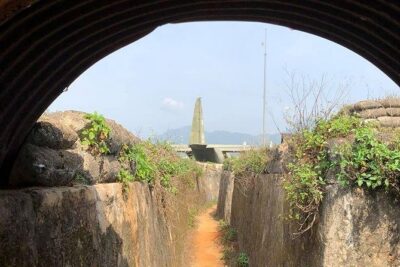
- Kỳ Đài (Flag Tower): A practical stop that explains how the Nguyen court staged announcements and ceremonies.
- Cua Ngo Mon (Noon Gate): The main gate reserved for the emperor and royal entourage, with standout architecture that survived conflict.
- Thai Hoa Palace (Palace of Supreme Harmony): The core palace used for important imperial ceremonies.
- The Nguyen court’s final chapter: Kiến Trung Palace ties the story to later reigns, including Khai Dinh and Bao Dai.
- A walk that ends in a different gate zone: You finish at Cửa Hiển Nhơn, so this is easy to connect with other things you want to do in Hue.
Over the pass and into the imperial city
- Hue to Hoi An ( Hoi An to Hue) Top Gear with Lefamily Riders Tours ( 1 way)
★ 5.0 · 3,156 reviews - Easy Rider private tour via Hai Van pass from Hue – Da Nang – Hoi An (1Way|Loop)
★ 5.0 · 1,542 reviews - Easy Rider From Hue Da Nang Hoi An Via Hai Van Pass With Mister T
★ 5.0 · 769 reviews - Hue to Dn/Hoi An: Hai Van Pass, beaches & Mt Monkey or vice versa
★ 5.0 · 743 reviews
Why this Hue Imperial City walk feels like good value
At $18 for about 2.5 hours, this tour is priced to be accessible, while still giving you a guided route through the most meaningful ceremonial spaces in Hue’s royal core. The big reason it feels like value is the group size, max 12. That keeps the pace more human, and it usually means your guide can actually answer questions rather than rushing everyone past the sights.
Another value point is what you get covered along the way. The stop list specifically calls out admission tickets for most of the major structures, while a few areas are free. Even if you are not a full-time history person, the tour helps you read the rules written into the layout.
The logistics that matter: timing, pace, and where you start

You are walking for roughly 2 hours 30 minutes. That is long enough to cover the core buildings in an orderly path, but short enough that you can still manage the rest of your day in Hue afterward.
The tour uses a mobile ticket, and you should plan to receive confirmation within 48 hours of booking, as long as space is available. The meeting point is at Cửa Ngăn in Phú Thuận, Hue, and you exit at Cửa Hiển Nhơn on Đoàn Thị Điểm Street. Ending at a different gate zone is a small detail, but it can save you time later, especially if you are heading toward nearby attractions, cafés, or your hotel.
English speaking is the standard, and the provider also notes that service animals are allowed. If you use a mobility aid, you will want to bring extra caution, because the site has uneven steps.
Start at Cửa Ngăn, then meet the royal rules of space
Hue’s Imperial City is not laid out like a normal museum. It is a map of power. Gates, courtyards, and palaces are grouped so you can physically understand who belonged where. Your guide’s job is to make that layout click.
As you walk from stop to stop, the story becomes clear: access was controlled. The tour keeps reminding you that certain gates were for the emperor, certain halls were for specific ceremonies, and some areas were reserved for the royal family. Even if you only catch parts of the explanation, the layout helps you fill in the rest.
More hours inside the Citadel walls
- Hue: Imperial City Walk, Motorbike Tour & Private Car Options★ 5.0 · 732 reviews
- Hue Imperial City Walking Tour: Citadel & Forbidden City★ 5.0 · 280 reviews
- Hue Imperial City Walking Tour (Kids Half-Price)★ 5.0 · 133 reviews
- Hue Imperial City Walking Tour 2.5 Hours★ 5.0 · 42 reviews
- Hue Imperial City Walking Tour maximum 12 pax★ 5.0 · 31 reviews
Nine Dynastic Cannons: bronze power with a date stamp

You begin with Cửu Vị Thần Công (Nine Dynastic Cannons). These were cast during Emperor Gia Long’s reign, cast in 1803 and completed in 1804. The point of this stop is not just the objects themselves. It’s what they represent: state power expressed in metal, and a court that planned in years, not weeks.
Because the cannons are historical monuments, this is also a good warm-up stop. It gets you thinking about the Nguyen Dynasty in a timeline, before you start moving into gates and audience spaces.
Kỳ Đài Flag Tower: public announcements in royal theater

Next comes the Flag Tower (Kỳ Đài). This is one of those spots that sounds simple, then suddenly becomes important once you understand its role. It is described as the site where major events took place during the Nguyen Dynasty, including festivals, celebrations, and public announcements.
Standing there, you can start to imagine the court as a stage set. The guide’s explanations help you connect the tower’s location and visibility to the idea of order, timing, and official messages being delivered to the wider public.
Cua Ngo Mon (Noon Gate): the emperor’s entrance

At the Noon Gate (Cửa Ngọ Môn / Cua Ngo Mon), the tour focuses on the gate’s function. This was the main gate of the Imperial City and was exclusively for the emperor and royal entourage. The architecture is noted as having withstood time and war, which is a big part of why it still anchors the complex today.
This stop is a turning point. Before this, you are learning roles and symbols. Here you see how the court used built space to mark hierarchy.
Thai Hoa Palace: where supreme harmony met real ceremonies

The biggest “pay attention” stop is Thai Hoa Palace, also known as the Palace of Supreme Harmony. The description frames it as the most important palace within the Imperial City, used for significant imperial ceremonies.
Even if you do not memorize every detail, you will benefit from the guide’s explanation about why this palace was central. It is the kind of place where the ceremonies were formal, and the space was meant to project legitimacy. If you are the type who likes your photos to mean something, this is where you get images that actually connect to a story.
Nine Dynastic Urns: monumental bronze with a royal schedule

The tour then heads to Nine Dynastic Urns. These were constructed between 1835 and 1837 during Emperor Minh Mang’s reign. Each urn is about 2.3 meters tall, and the description notes a massive weight range.
What I like here is that it continues the “timeline feeling” you started earlier with Emperor Gia Long. You get the sense of a dynasty building major statements in stages over decades, not all at once. It also gives you a breather spot: after gates and palaces, these huge objects are easier to take in slowly.
Thế Miếu (Mieu Temple): worship and royal memory
At Thế Miếu (Mieu Temple), you shift from ceremony and power display into worship and remembrance. The tour notes it was built in 1804 and served as a place of worship for Nguyen emperors and queens.
It also honors great officials who contributed to the Nguyen Lords’ reign. That detail matters because it expands the story beyond emperors only. The court system included key figures who shaped stability and administration, and the temple layout reflects that respect.
Purple Forbidden City area: third level power in real space
Then you enter the Hue Imperial City (the Citadel) zone described as the Purple Forbidden City. The key takeaway is access. This was reserved for the emperor and royal family. The tour notes it is the third level of the Imperial City, and you can feel that “layering” as you move.
This is where your guide’s explanation about restrictions really earns its keep. You do not just see buildings. You understand how the design limited movement, controlled visibility, and kept authority concentrated.
Kiến Trung Palace: the last chapter, Khai Dinh and Bao Dai
Next is Kiến Trung Palace, built in 1923 during Emperor Khải Định’s reign. It is described as the residence of the last two emperors of the Nguyen Dynasty, including Khải Định and Bảo Đại.
This stop is valuable because it shifts the tone from early Nguyen consolidation to the closing years. If you want to understand Hue’s imperial story as a long arc rather than a single golden age, this is one of the most helpful places on the walk.
Truong Lang (Long Corridor): how people moved inside rules
In the Forbidden Purple City area, the tour includes Truong Lang (Long Corridor). This is a system of long corridors that helped the emperor and court facilitate communication and movement within the palace zones.
The corridor stop is easy to miss if you are only chasing dramatic halls, but it is a smart inclusion. Corridors are where logistics happen. They show you that court power was also about organization, routes, and controlled access.
Thai Binh Lau (Hall of Peace): a moment for composing and resting
The walk continues to the Hall of Peace (Thai Binh Lau), described as a tranquil retreat for the emperor to rest, reflect, and compose poetry. If you only picture palaces as ceremonial stages, this is a nice balance point.
This is also a useful pause in the overall pace. It gives you a slower, calmer stop to absorb the setting before the tour returns to performance and gates.
Duyet Thi Duong Theater: royal performances as court life
Next is the Duyet Thi Duong Theater, described as a royal theater and one of four built during the Nguyen Dynasty for cultural performances.
This stop adds a human angle. Power was not only about proclamations and control. It was also about culture and ritualized entertainment within the court setting. If you are into music, dance, or theater, you will probably enjoy this part more than you expect from a short walk.
Hien Nhơn Gate: the eastern exit that shapes your next plans
The tour ends at Hien Nhơn Gate, located on the eastern side of the Imperial City. The description says it was built in 1805 and later renovated under Minh Mang and Khải Định. It’s described as one of the more beautiful gate points in the complex.
Finishing here is practical. You exit at Cửa Hiển Nhơn, so your afternoon plans can start immediately without backtracking. It is also a reminder that this is not a loop tour in the same doorway. You are leaving through a different side than where you entered.
Comfort tips if you have limited stamina or wobbly footing
The tour is generally suited to most travelers, but the grounds include uneven steps. If you are 60+ or you tend to get tired on stone surfaces, take this seriously. Bring shoes with grip, and take your time at each stop. Your guide will set the pace, but you still control your own walking speed.
Also, bottled water is not included. Even if it does not feel hot yet, Hue can surprise you. I suggest you carry a small bottle or plan to buy water near your meeting area before you start.
Who should book this tour, and who might prefer a different pace
This is a great match if:
- You want a focused introduction to the Imperial City and Forbidden City layout.
- You like guided context, especially about who had access and why.
- You appreciate a small group setting with an English speaking guide.
You might choose something else (or go with extra caution) if:
- Walking on uneven steps is a big challenge for you.
- You prefer a slower pace with fewer stops and more time sitting.
Should you book Hue Imperial City Walking Tour?
If your goal is to understand Hue’s royal layout without getting lost, this tour is a solid choice. The route covers the big ceremonial buildings and the rules behind them, and you do it with a small group size that helps the guide stay interactive.
The one real caution is physical comfort. If you are steady on your feet and ready for uneven steps, you will likely find it rewarding. If you know you tire quickly, bring extra caution, plan water, and consider whether you want a more gentle option.
If you do book, go in with the mindset that gates and hall names are clues. When the guide explains who used each space, the whole Imperial City makes more sense, and your photos start feeling like evidence, not just decoration.
FAQ
How long is the Hue Imperial City walking tour?
It runs about 2 hours 30 minutes.
What is the group size limit?
The tour has a maximum of 12 travelers.
Where does the tour start and end?
It starts at Cửa Ngăn in Phú Thuận, Hue, and ends at Cửa Hiển Nhơn in Thuận Thành, Hue.
Is the guide English speaking?
Yes, the tour includes an English speaking guide.
Is there a mobile ticket?
Yes, the tour uses a mobile ticket.
What parts of the tour include admission tickets?
The stop details specify admission ticket included for several sites, and some areas are listed as free, such as Truong Lang (Long Corridor), the Hall of Peace (Thai Binh Lau), and Hien Nhơn Gate.
What is not included in the price?
The tour notes that all fees and taxes, private transportation, and bottled water are not included.
When will I get confirmation after booking?
Confirmation is received within 48 hours of booking, subject to availability.
How far in advance is this typically booked?
On average, it is booked about 35 days in advance.
Can I cancel for a full refund?
Yes. You can cancel up to 24 hours in advance for a full refund. If you cancel less than 24 hours before the start time, the amount paid is not refunded.
More Tour Reviews in Hue
- Easy Rider private tour via Hai Van pass from Hue – Da Nang – Hoi An (1Way|Loop)
★ 5.0 · 1,542 reviews


More Time Inside the Citadel


More Days Up in Hue
- Easy Rider private tour via Hai Van pass from Hue – Da Nang – Hoi An (1Way|Loop)
★ 5.0 · 1,542 reviews
Just added around Hue




Hue Imperial City Tours, compared.
 ★ 4.9Hue Customizable Tour with Imperial Citadel & Forbidden CityFrom $12937 reviews
 ★ 4.7Da Nang/Hoi An: Hue Imperial City via Hai Van Pass & LunchFrom $9753 reviews
 ★ 5.0Hue: Imperial City Walk, Motorbike Tour & Private Car OptionsFrom $7732 reviews
 ★ 5.0Hue City and The Citadel via Hai Van Pass Daily Small Group TourFrom $43362 reviews
 ★ 5.0Hue Citadel tour by authentic Train via Hai Van Pass from Da NangFrom $46337 reviews
 ★ 4.8From Da Nang/Hoian/Hue: Hue Imperial City Full-Day TourFrom $31295 reviews
 ★ 5.0Hue Imperial City Walking Tour: Citadel & Forbidden CityFrom $9280 reviews
★ 4.8Hue Imperial City Walking Tour: Citadel & Forbidden CityFrom $11245 reviews
★ 5.0Hue Imperial City Walking Tour: Citadel & Forbidden CityFrom $9280 reviews
★ 4.8Hue Imperial City Walking Tour: Citadel & Forbidden CityFrom $11245 reviews
Browse the lists this tour appears in